Egypt FAQs: Answers to the Most Common Questions Before You Travel
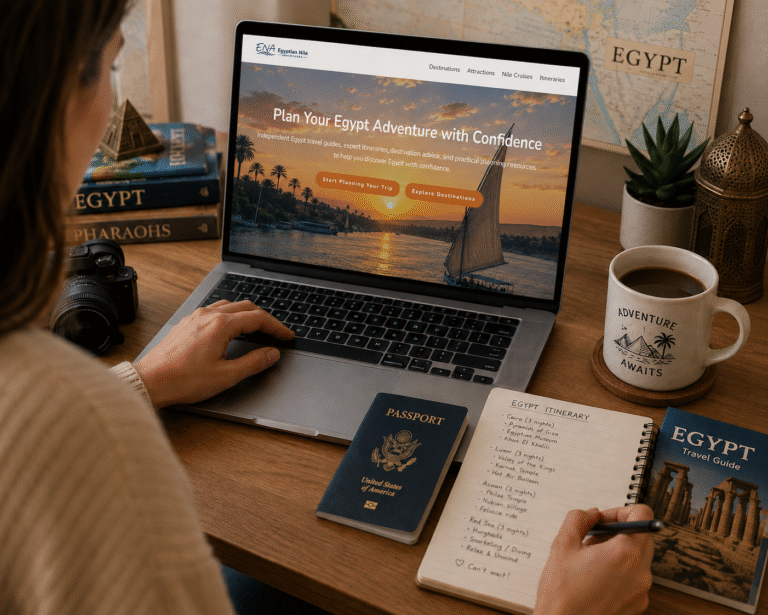
Planning a first trip to Egypt naturally raises a lot of questions. Some are practical—visas, money, transportation and what to pack. Others are harder to judge from a distance: Is Egypt safe? How many days do you really need? Can women travel independently? Should you carry cash? Is the summer heat manageable?
This guide brings the most common Egypt travel questions together in one place, with direct answers and links to the more detailed Egyptian Nile Adventures guides when you need to go deeper.
Because visa rules, transportation procedures, attraction policies and other practical information can change, details that affect your trip should always be checked again shortly before departure.
Quick Answers
For most first-time visitors, 7–10 days provides enough time for Cairo and Upper Egypt without rushing excessively. October through April generally offers the most comfortable sightseeing weather. Carry both Egyptian pounds and a payment card, arrange mobile data rather than relying entirely on Wi-Fi, and pack lightweight clothing together with comfortable walking shoes and strong sun protection.
Most importantly, don’t try to plan Egypt as though every destination works the same way. Transportation, climate, clothing expectations and even payment habits can differ between Cairo, Luxor, Aswan, Alexandria and the Red Sea.
Before You Travel
Do I need a visa to visit Egypt?
Many international visitors require a visa, but the correct process depends on your nationality and circumstances.
Egypt’s official e-Visa system currently allows nationals of numerous countries—including the United States, Canada, the United Kingdom, Australia, much of Europe and several Asian and Latin American countries—to apply online. The official portal says applications should be created at least seven days before departure.
Do not assume that because another traveler obtained an e-Visa or Visa on Arrival, the same option applies to your passport.
Use our Egypt Visa Guide for the different options, then verify your eligibility using Egypt’s official e-Visa portal immediately before applying.
How long does my passport need to be valid?
For travelers using Egypt’s e-Visa system, the official portal currently requires a passport valid for at least six months from the date of arrival. It also lists the e-Visa printout, itinerary and accommodation information among the documents travelers may need on arrival.
If your passport is approaching expiration, deal with that before booking around assumptions about eligibility.
Do I need travel insurance for Egypt?
Travel insurance is strongly worth considering even when it is not an entry requirement for your nationality.
A useful policy should be evaluated primarily for emergency medical treatment, medical evacuation, trip interruption and cancellation, rather than simply lost luggage.
This becomes particularly important if your trip includes substantial prepaid costs such as flights, a Nile cruise, private tours or resort stays.
Read our Egypt Travel Insurance Guide before choosing a policy.
Planning Your Itinerary
How many days do you need in Egypt?
For most first-time visitors, 7–10 days offers the best balance.
That gives you enough time to experience Cairo, Giza and Upper Egypt without turning every day into a transfer.
If you have only three or four days, focus on Cairo and Giza. Five or six days can combine Cairo with Luxor or another carefully chosen addition. Around 10–14 days gives you much more room for Aswan, Abu Simbel, Alexandria, Fayoum or several days at the Red Sea.
The biggest mistake is deciding how many destinations will technically fit instead of considering how much time you’ll actually have once flights, trains, hotel changes and transfers are included.
See How Many Days Do You Need in Egypt? for realistic itinerary options.
What is the best time to visit Egypt?
For traditional sightseeing, October through April generally provides the easiest weather.
Egypt’s official tourism site describes the country as a year-round destination but notes substantial regional differences, with hotter conditions in the south and milder weather on the North Coast.
Summer is not automatically a bad time to visit. It simply changes the type of trip that works best. Luxor and Aswan can become extremely hot, so archaeological sightseeing needs early starts and realistic pacing. The Mediterranean and Red Sea make more sense for travelers prioritizing beaches and water activities.
Use Best Time to Visit Egypt for the travel decision and Egypt Weather by Month for actual seasonal conditions.
Is Egypt too hot in summer?
It can be for intensive sightseeing—particularly in Luxor, Aswan and Abu Simbel.
The practical issue is not whether attractions remain open. It is whether you want to spend several hours outdoors in extreme heat.
Summer travelers should begin exposed archaeological visits early, take longer midday breaks and avoid copying the same sightseeing schedule they would use during winter.
The CDC also advises travelers in Egypt to limit strenuous physical activity during high temperatures and remain hydrated.
Should I visit Cairo, Luxor or Aswan?
If this is your first Egypt trip and time allows, they provide complementary experiences rather than interchangeable ones.
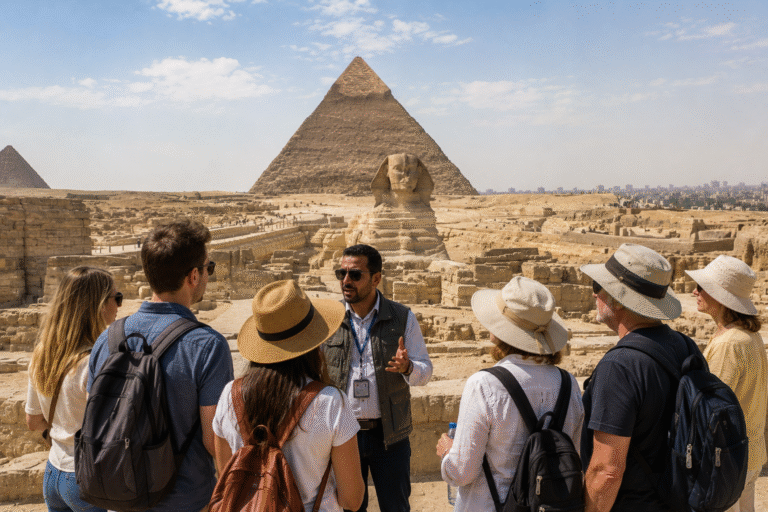
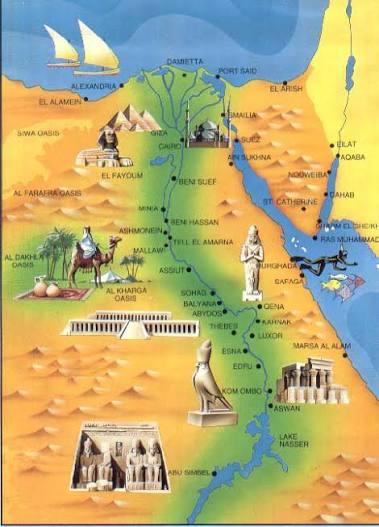
Cairo and Giza give you the Pyramids, major museums, Islamic Cairo, Coptic Cairo and the experience of modern Egypt’s largest city.
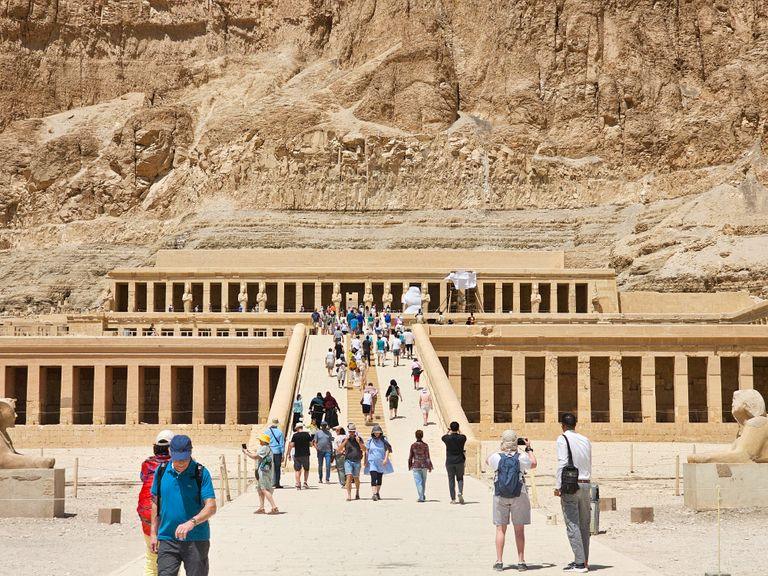
Luxor has the greatest concentration of monumental ancient Egyptian sites, including Karnak, Luxor Temple and the West Bank.
Aswan is quieter and more scenic, with Philae Temple, Nubian heritage, Nile islands and access to Abu Simbel.
A first-time trip usually becomes stronger by combining them rather than trying to decide which single city is “best.”
Safety and Everyday Travel
Is Egypt safe for tourists?
Most travelers visit Egypt’s established tourism destinations without serious problems, but safety should never be reduced to a simple yes-or-no statement.
Visitors should follow current government travel advice, avoid areas subject to official restrictions, use reputable transportation and exercise ordinary awareness in crowded tourist areas.
The practical problems tourists encounter most often are far more likely to involve persistent sellers, pricing misunderstandings, traffic, heat or minor opportunistic theft than serious crime.
See Is Egypt Safe for Tourists? for a fuller discussion of destinations, transportation, scams and traveler-specific considerations.
Is Egypt safe for solo travelers?
Solo travel is entirely possible, but good planning matters.
Independent travelers generally benefit from arranging the more logistically complicated parts of their itinerary in advance—airport transfers, long-distance transport or particular excursions—while remaining free to explore independently elsewhere.
A solo traveler also bears the full cost of hotel rooms, private transportation and some cruise supplements, so budgeting may differ from traveling as a couple.
Is Egypt safe for women traveling alone?
Many women visit Egypt independently, but female travelers may experience more unsolicited attention than they are accustomed to at home.
Practical preparation matters more than broad reassurance. Dress with the setting in mind, use reliable transportation, avoid isolated locations late at night and be confident about ending interactions you do not want.
Women do not need to cover their hair during ordinary sightseeing. A head covering may be requested when entering some mosques.
Money and Payments
What currency does Egypt use?
Egypt’s currency is the Egyptian pound, abbreviated EGP and commonly shown as E£.
Everyday purchases are generally priced in Egyptian pounds, although some tourism businesses may quote certain services in foreign currencies.
Don’t build your trip around paying for everything in US dollars or euros.
Should I bring cash or use credit cards?
Use both.
Cards are useful at larger hotels, established restaurants, airlines, shopping centers and many formal tourism businesses.
Egyptian pounds remain useful for taxis, tips, smaller restaurants, cafés, shops and everyday purchases.
Carry enough cash for routine spending but avoid keeping your entire travel budget in one wallet.
Our Money in Egypt: Currency, ATMs & Credit Cards guide explains ATM use, cards and exchange strategy in detail.
Are ATMs easy to find?
Yes, in the destinations most international visitors use.
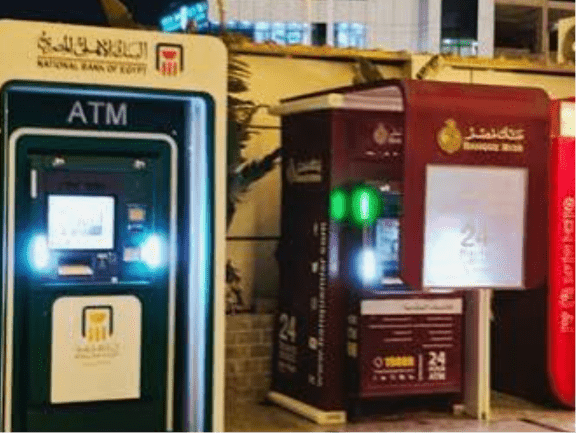
Major Egyptian banks operate ATMs throughout Cairo, Giza, Alexandria, Luxor, Aswan and the Red Sea resort areas.
Withdrawing Egyptian pounds after arrival is generally much easier than trying to obtain large quantities before leaving home.
Before traveling, check your own bank’s foreign ATM charges and daily withdrawal limits.
Should I accept the ATM’s currency conversion?
Generally, no.
If an ATM offers to convert your withdrawal into your home currency, selecting the transaction in Egyptian pounds usually allows your own bank or card network to perform the conversion instead.
This avoids the additional exchange-rate markup that can accompany Dynamic Currency Conversion.
How much should I tip in Egypt?
Tipping—often called baksheesh—is common for genuine service.
The appropriate amount depends on what was provided. Hotel staff, guides, drivers, restaurant servers and cruise crews are among the people visitors commonly tip.
That does not mean everyone who approaches you is owed money.
Keep smaller Egyptian-pound notes available and distinguish between genuine service and unsolicited assistance.
Our Tipping in Egypt guide gives practical examples and ranges.
Transportation
What is the easiest way to get around Egypt?
There isn’t one transport method that works best for the entire country.
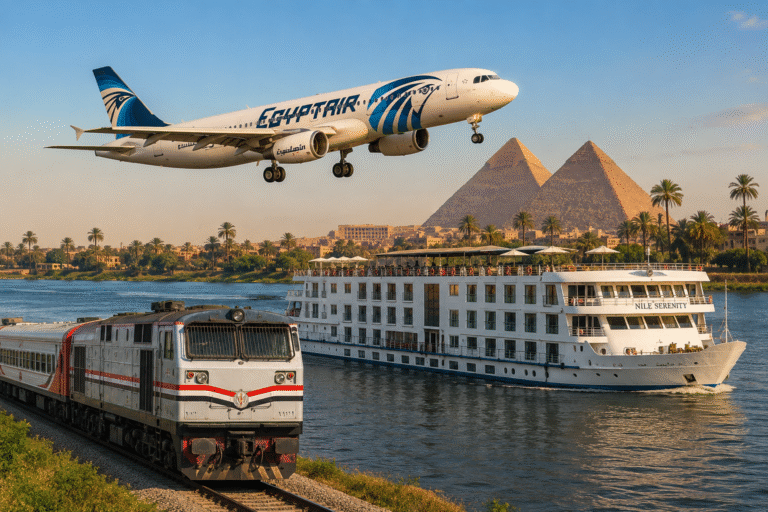
A typical first-time trip may combine domestic flights, trains or road transfers between cities; Uber or Careem in Cairo; traditional taxis and private drivers elsewhere; and a Nile cruise between Luxor and Aswan.
The best strategy is to choose transportation route by route.
See Transportation in Egypt for the full comparison.
Is Uber available in Egypt?
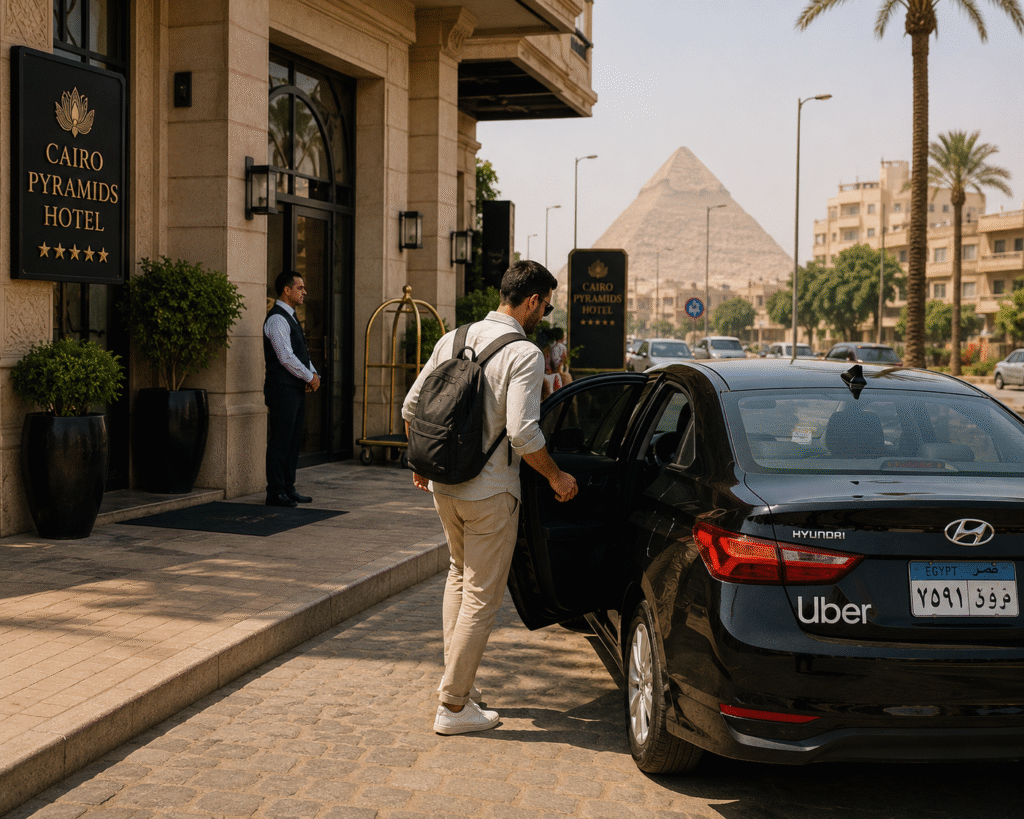
Uber is particularly useful in Cairo and Alexandria, where the app helps visitors see the driver, route and estimated fare before traveling.
You should not assume the same availability throughout Egypt.
Luxor, Aswan and other destinations rely much more heavily on taxis, private drivers and hotel-arranged transportation.
See Uber vs. Taxis in Egypt before deciding which option to use.
Are trains a good way to travel around Egypt?
They can be, particularly between Cairo and Upper Egypt, if you value slower travel over saving time.
However, travelers should check booking procedures rather than relying on old instructions. Egyptian National Railways’ current online booking page states that its web reservation system is for Egyptian nationals and that reservation for other nationalities remains under development.
That is exactly the type of Egypt-specific operational detail worth checking immediately before your journey.
Should I rent a car in Egypt?
For most first-time visitors, no.
Hiring a driver usually provides the flexibility travelers want without requiring them to navigate unfamiliar traffic patterns, road conditions and parking.
Self-driving may suit experienced visitors with a specific itinerary, but it is rarely the easiest option for a first Egypt trip.
Food and Water
Can tourists drink the tap water in Egypt?
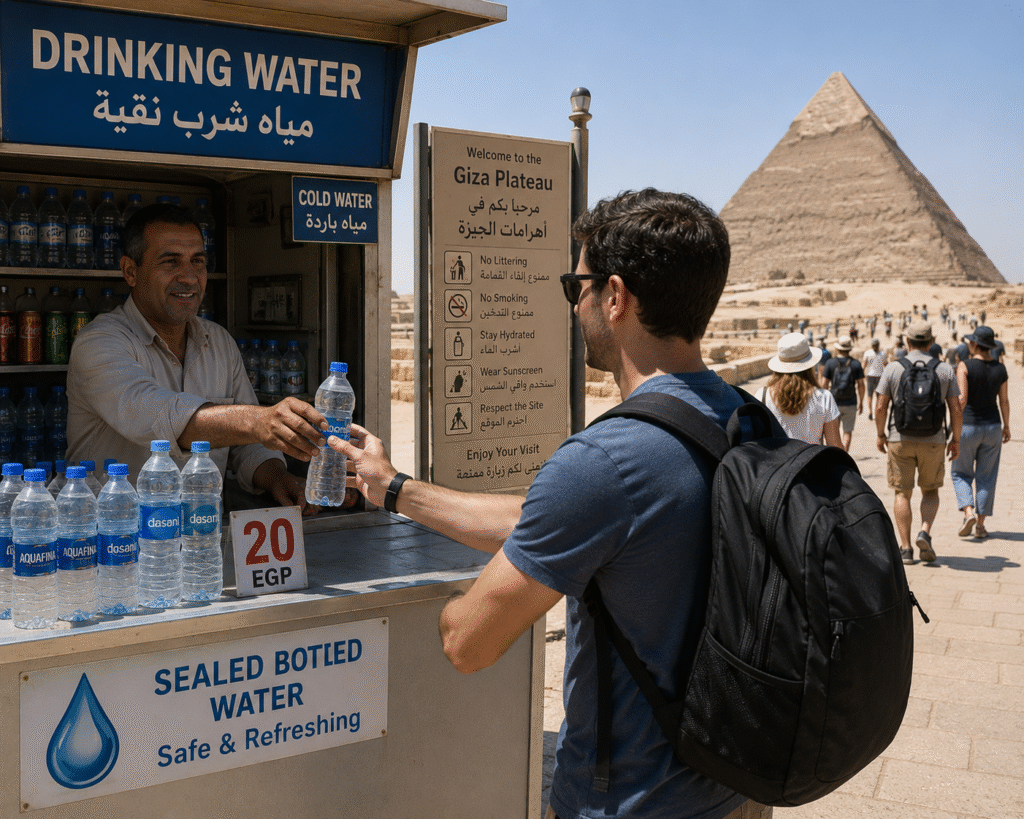
Most international visitors are better served by sealed bottled water or water from a trusted filtered source.
Food and water conditions can vary, and travelers may be more sensitive to unfamiliar organisms even where local residents drink the water.
The CDC advises travelers to pay close attention to safe food and drink practices and specifically warns against exposure to untreated freshwater in Egypt.
Read Drinking Water in Egypt for guidance on bottled water, ice and staying hydrated.
Is Egyptian food safe to eat?
Most visitors eat Egyptian food without problems.
The better question is not whether Egyptian cuisine is safe but whether the specific food has been stored, handled and prepared appropriately.
Choose busy establishments with good food turnover, be sensible with raw foods when hygiene is uncertain and pay attention to how your own stomach reacts during the first few days.
Avoiding local food completely would mean missing an important part of contemporary Egyptian culture.
Clothing and Packing
What should women wear in Egypt?
There is no requirement for female tourists to dress like Egyptian women.
For most situations, lightweight clothing that provides reasonable coverage works well both culturally and practically. Loose trousers, longer skirts, dresses, T-shirts and breathable shirts are all useful.
Very revealing beachwear makes more sense at a resort than in Cairo neighborhoods or religious sites.
Women should carry a lightweight scarf if they plan to visit mosques where hair covering may be requested.
See What to Wear in Egypt for specific examples.
Can men wear shorts in Egypt?
Yes, particularly around tourist attractions, hotels, Nile cruises and resorts.
Knee-length shorts are more versatile than very short athletic styles and work in most casual sightseeing environments.
For religious sites or more traditional settings, lightweight trousers provide greater flexibility.
What shoes should I wear?
Comfortable walking shoes or supportive trainers.
Egypt’s archaeological sites frequently involve sand, uneven stone, steps and long walking distances.
The Giza Plateau, Saqqara, Karnak and the Valley of the Kings are not ideal places to break in new shoes.
What should I pack that people often forget?
The easily forgotten items are often more useful than additional clothes.
A power bank, sun protection, lightweight scarf, reusable water bottle, appropriate plug adapter and comfortable walking shoes are particularly useful.
The complete Egypt Packing List covers seasonal and itinerary-specific packing.
Phones, Internet and Electricity
Should I buy an Egyptian SIM card?
For most visitors staying more than a few days, a local SIM or eSIM is convenient.
Mobile data is useful for maps, transportation apps, WhatsApp, hotel communication, flight changes and accessing reservations away from Wi-Fi.
Don’t assume hotel Wi-Fi will cover everything you need during the day.
See Egypt SIM Cards & Internet Guide for the current options.
What electrical plugs does Egypt use?
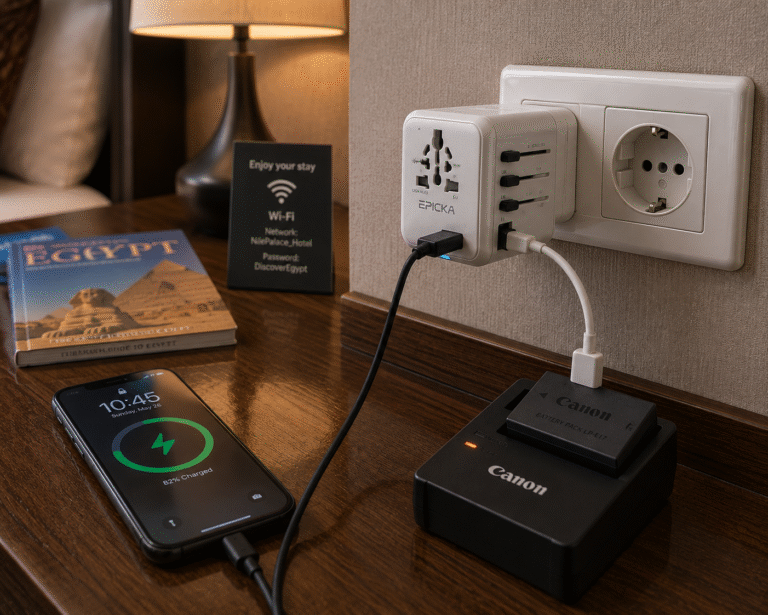
Egypt commonly uses Type C and Type F plugs.
Most modern phone, laptop and camera chargers support a broad input range, but you should check the small print on the charger itself.
If it states 100–240V, 50/60Hz, a plug adapter is normally all that is required.
A plug adapter changes the shape of the connection. It does not convert voltage.
See Egypt Electricity & Power Adapter Guide before packing appliances such as hair dryers or styling tools.
Culture and Etiquette
Do tourists need to speak Arabic?
No.
English is widely used within Egypt’s tourism industry, particularly in hotels, major attractions and established tourism businesses.
Learning a few Egyptian Arabic phrases is still worthwhile.
Shukran — Thank you
La, shukran — No, thank you
Min fadlak / min fadlik — Please
Ahlan — Hello
Even basic attempts are often appreciated, and “La, shukran” is particularly useful when declining unwanted offers politely.
Is Egypt very conservative?
Egypt is socially diverse.
What feels normal at a Red Sea resort may differ substantially from expectations inside a mosque, residential neighborhood or rural community.
Travelers do not need to adopt local customs completely, but paying attention to context is respectful and usually makes interactions easier.
Modern Egypt should not be reduced either to a strict stereotype or to the assumption that tourist environments represent the entire country.
Can I take photographs everywhere?
No.
Photography rules vary between museums, archaeological sites, religious buildings, government areas and individual attractions, and policies can change.
Some locations permit ordinary phone photography while restricting professional equipment, flash, tripods or commercial filming.
There is also an important distinction between photographing monuments and photographing people. Ask before taking identifiable close-up photographs of individuals, particularly in homes, workplaces or local communities.
Check the current rule at the attraction itself rather than relying on an old blog post.
Can I visit Egypt during Ramadan?
Yes.
Tourism continues during Ramadan, and major attractions remain accessible, but daily rhythms can change.
Some restaurants and businesses adjust hours, traffic may become heavier before sunset, and evenings can become particularly active after the daily fast ends.
Visitors are not expected to fast, but being considerate of people who are fasting is appropriate.
Because Ramadan follows the Islamic lunar calendar, its dates shift each year.
Nile Cruises and Upper Egypt
Is a Nile cruise worth it?
For many first-time visitors, yes—but not because it is the only way to travel between Luxor and Aswan.
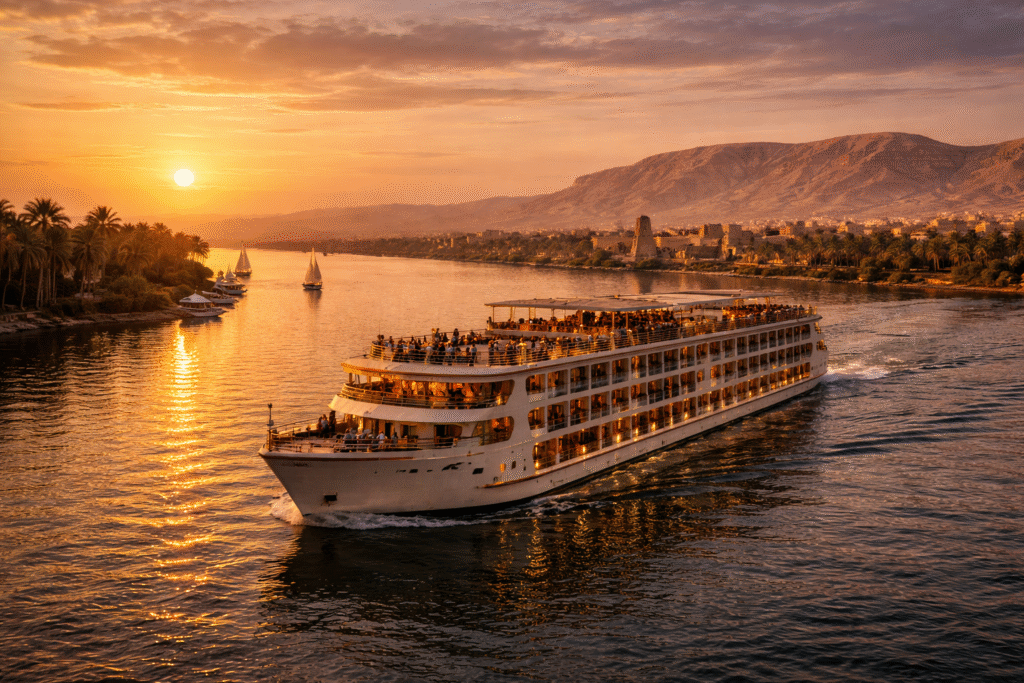
A cruise combines accommodation, meals, transportation and access to archaeological sites along the route. The major advantage is convenience: you unpack once while the ship moves between destinations.
The limitation is structure. Cruise schedules determine when excursions occur and how long you spend at each stop.
Travelers who value independence or want considerably more time in Luxor and Aswan may prefer hotels and land transportation.
How long is a typical Nile cruise?
Many classic Luxor–Aswan itineraries operate over several nights, with the exact length depending on direction, vessel and schedule.
Rather than choosing a cruise based purely on the number of nights, compare which archaeological sites are included, how excursions are organized, what the quoted price covers and how much time is actually spent sailing.
Is Abu Simbel worth the trip?
For travelers particularly interested in ancient Egyptian architecture and history, Abu Simbel is often worth the additional travel.
The practical consideration is distance. Abu Simbel lies well south of Aswan, so visiting it requires additional transport and usually an early start.
Don’t add it automatically simply because it appears on many itineraries. Include it if its historical significance is worth the additional time to you.
Families, Seniors and Accessibility
Is Egypt good for families?
It can be excellent, particularly for children old enough to engage with archaeology, boats and museums.
The main challenge is pacing.
Hot weather, long sightseeing days, early starts and extensive walking can exhaust children more quickly than adults.
Families generally benefit from fewer attractions per day, hotel pool time and some activities that break up the archaeological sightseeing.
Is Egypt suitable for senior travelers?
Yes, but itinerary design matters.
Private transportation, centrally located accommodation, manageable sightseeing days and avoiding extreme summer heat can make a major difference.
Travelers should also understand that archaeological sites were not designed for modern accessibility. Uneven surfaces, steep steps and limited shade are common.
Is Egypt wheelchair accessible?
Accessibility varies considerably and remains a genuine limitation at many historic and archaeological sites.
Modern museums, hotels and newer facilities may provide substantially better accessibility than ancient temples, tombs and archaeological landscapes.
Travelers with mobility requirements should investigate specific attractions, hotels and vehicles rather than relying on a general claim that a destination is accessible.
What Should I Verify Immediately Before My Trip?
Even after reading a detailed Egypt guide, some information deserves one final check shortly before departure.
Verify your visa and passport requirements, flight and train arrangements, weather forecast, attraction procedures, any time-sensitive reservations, payment requirements and your government’s current travel advice.
Egyptian Nile Adventures’ editorial standards specifically require changing information—including visas, regulations, transportation procedures, attraction policies and payment methods—to be rechecked rather than assumed to remain static.
That is also good advice for travelers.
Official Resources
For current visa information, use Egypt’s official Ministry of Interior e-Visa Portal rather than relying exclusively on third-party visa services. Official Egypt e-Visa Portal
For current tourism information and broad destination guidance, Egypt’s official tourism platform provides practical information about climate, destinations and travel planning. Experience Egypt official tourism website
For train procedures, use Egyptian National Railways’ current system.
Related Egyptian Nile Adventures Articles
Egypt Travel Checklist — Work through your preparations in order before departure.
Egypt Travel Mistakes to Avoid — Learn which planning errors cause the most unnecessary problems.
Is Egypt Safe for Tourists? — Practical safety advice and realistic expectations.
Best Time to Visit Egypt — Choose travel dates based on weather and trip style.
Egypt Weather by Month — Compare conditions throughout the year.
How Many Days Do You Need in Egypt? — Build a realistic itinerary.
Egypt Travel Costs: How Much Does a Trip Cost? — Create a practical trip budget.
Money in Egypt: Currency, ATMs & Credit Cards — Understand everyday payments.
Tipping in Egypt — Learn how baksheesh works.
Transportation in Egypt — Compare flights, trains, taxis and private transportation.
Uber vs. Taxis in Egypt — Decide which works better in different destinations.
What to Wear in Egypt — Plan clothing for weather, sightseeing and local settings.
Egypt Packing List — Pack what you will actually use.
Egypt Travel Insurance Guide — Understand what coverage matters.
Egypt SIM Cards & Internet Guide — Plan your mobile connection.
Egypt Electricity & Power Adapter Guide — Check whether your electronics need an adapter.
Drinking Water in Egypt — Understand water and hydration precautions.
Final Advice
You do not need to master every detail of Egypt before you visit.
You do need to get the important decisions right: entry requirements, realistic itinerary timing, suitable transportation, access to money, weather preparation and basic awareness of local customs.
Once those pieces are in place, allow some flexibility.
Egypt is easier to enjoy when every hour is not optimized and every interaction is not treated as a potential problem. Prepare well enough that you can stop researching once you arrive and pay attention to the country around you.