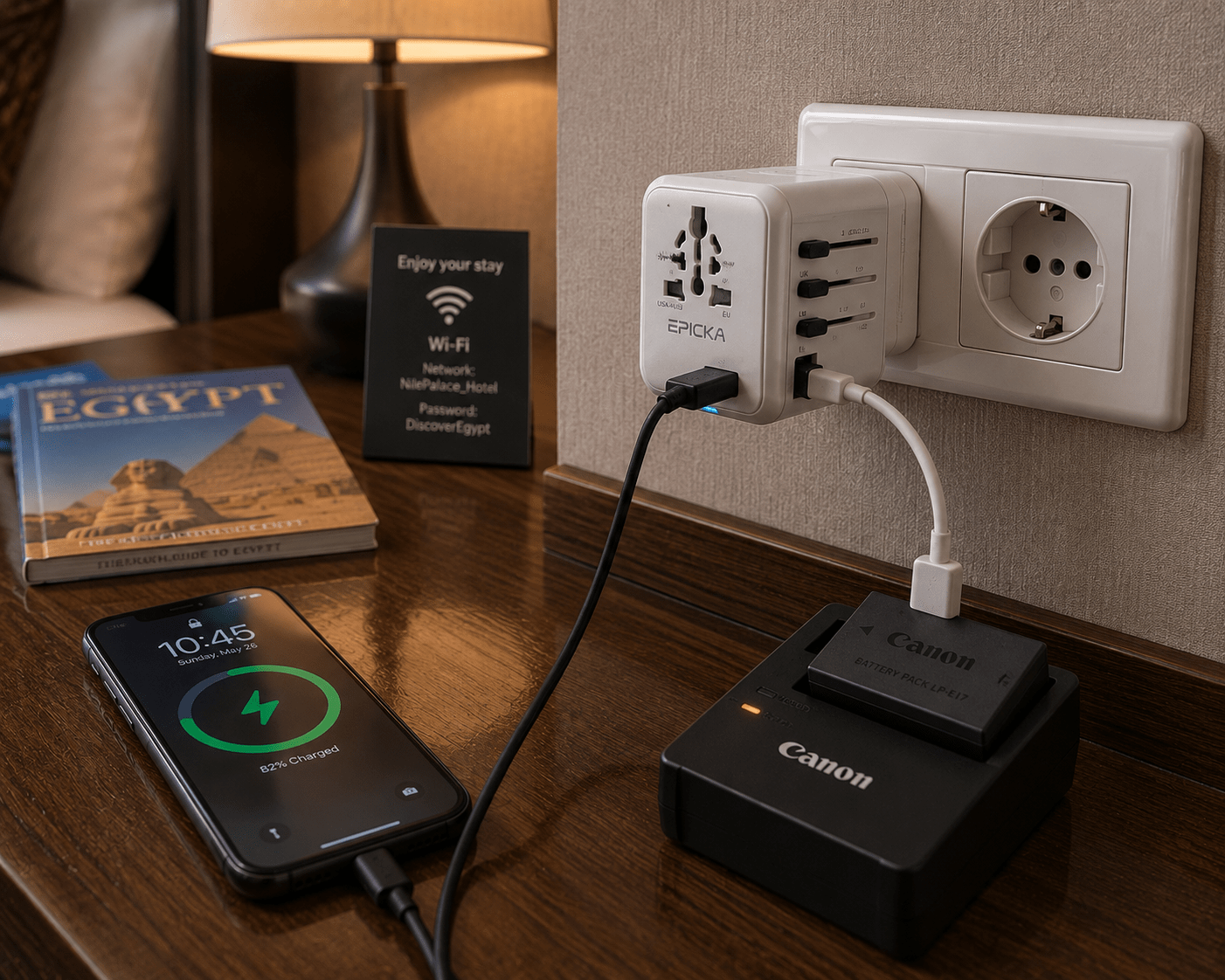
Egypt Electricity & Power Adapter Guide: Do You Need a Plug Adapter?
One of the easiest parts of preparing for a trip to Egypt is making sure your electronics will work after you arrive. Fortunately, for most travelers, the solution is straightforward.
Egypt uses the same electrical system as much of continental Europe, with Type C and Type F power outlets, a 230-volt supply, and a 50Hz frequency. If you’re traveling from Europe, your devices may already be compatible. Visitors from countries such as the United States, Canada, the United Kingdom, Australia, and Japan will usually need at least a plug adapter—and in some cases, a voltage converter as well.
Taking a few minutes to check your devices before departure can save frustration after you arrive.
Quick Answer
For most visitors:
- Egypt uses Type C and Type F electrical outlets.
- Standard electricity is 230 volts at 50Hz.
- Most modern phone, tablet, laptop, and camera chargers work automatically with 100–240V power.
- Travelers from the United States, Canada, Japan, and some other countries will normally need a plug adapter.
- Some older appliances may also require a voltage converter.
What Plug Types Are Used in Egypt?
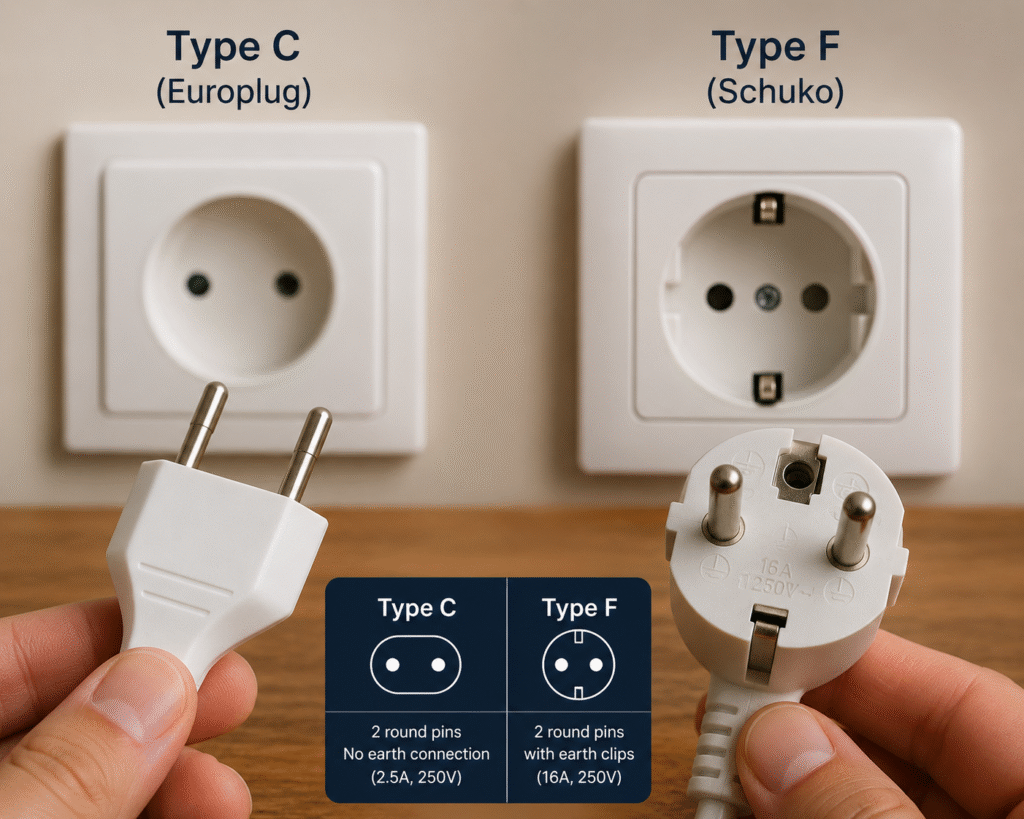
Egypt primarily uses two plug types:
- Type C
- Type F
Type C has two round pins and is commonly used throughout Europe.
Type F, sometimes called the “Schuko” plug, also has two round pins but includes grounding clips on the sides.
Many hotels, apartments, and modern buildings use outlets that accept either type.
If your country’s plugs have flat blades rather than round pins, you’ll almost certainly need an adapter.
Egypt’s Electrical System
Egypt operates on:
- Voltage: 230V
- Frequency: 50Hz
These specifications are identical or very similar to those used across much of Europe.
The voltage is considerably higher than the standard household voltage used in countries such as the United States and Canada, making it important to check your devices before plugging them in.
Do You Need a Plug Adapter?
That depends on where you’re traveling from.
Generally speaking:
You usually do not need an adapter if you’re traveling from:
- Most of continental Europe
You will usually need an adapter if you’re traveling from:
- United States
- Canada
- United Kingdom
- Ireland
- Australia
- New Zealand
- Japan
- Many countries in Asia and South America
Even if your charger supports Egypt’s voltage, it still needs to fit the socket.
Do You Need a Voltage Converter?
For most travelers, no.
Nearly all modern electronic devices—including smartphones, laptops, tablets, cameras, smartwatches, and USB chargers—are designed to operate on 100–240V.
You can usually confirm this by reading the small label on the charger.
If it states something similar to:
Input: 100–240V, 50/60Hz
then you only need a plug adapter.
Older appliances such as hair dryers, curling irons, electric razors, or travel kettles may only support 110–120V. These devices require either a voltage converter or a version designed for international travel.
How to Check Your Charger
Before packing, look at the charger rather than the device itself.
Most chargers list their input range in small print.
For example:
Input: 100–240V ~ 50/60Hz
This means the charger automatically adjusts to Egypt’s electrical system.
If you only see:
Input: 110V
or
120V
the device should not be plugged directly into an Egyptian outlet without an appropriate voltage converter.
Should You Bring a Universal Travel Adapter?
For most visitors, yes.
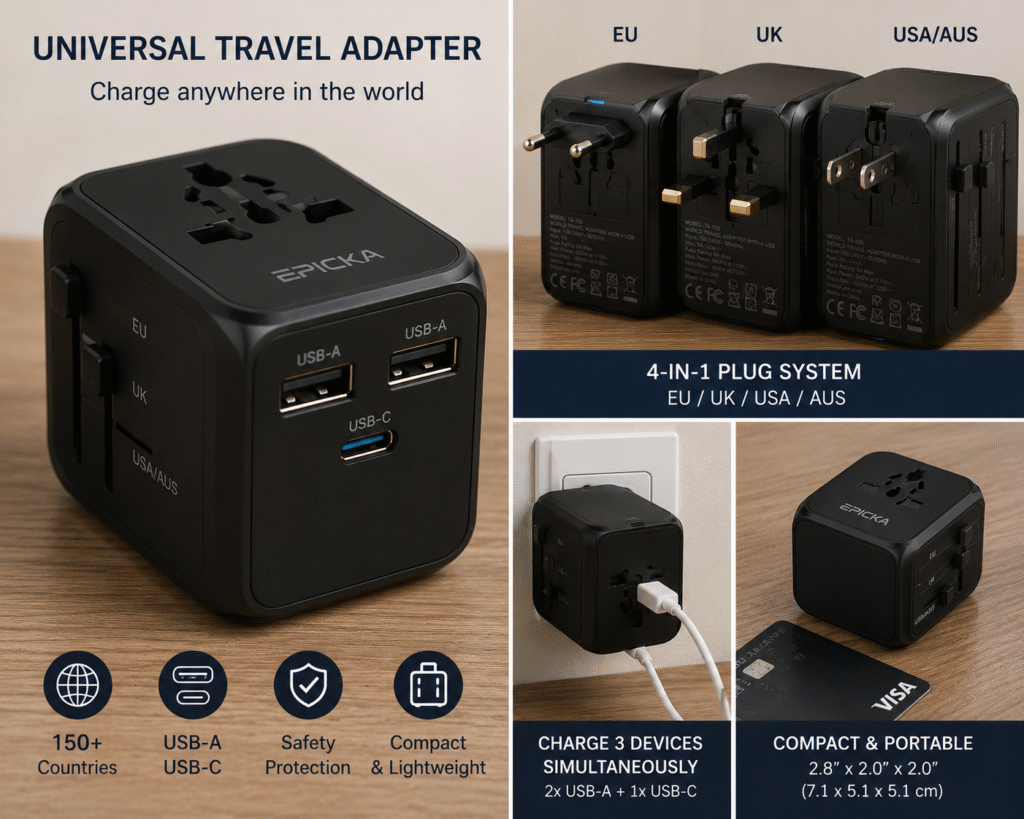
A good-quality universal travel adapter works in dozens of countries, making it useful long after your Egypt trip.
Many models also include:
- USB-A charging ports
- USB-C charging ports
- Multiple charging sockets
- Surge protection
Remember that a travel adapter changes the plug shape, not the electrical voltage.
If one of your devices requires voltage conversion, the adapter alone will not provide it.
Charging Multiple Devices
Many travelers now carry several electronic devices.
A typical traveler may have:
- Smartphone
- Smartwatch
- Camera
- Tablet
- Laptop
- Power bank
- Wireless earbuds
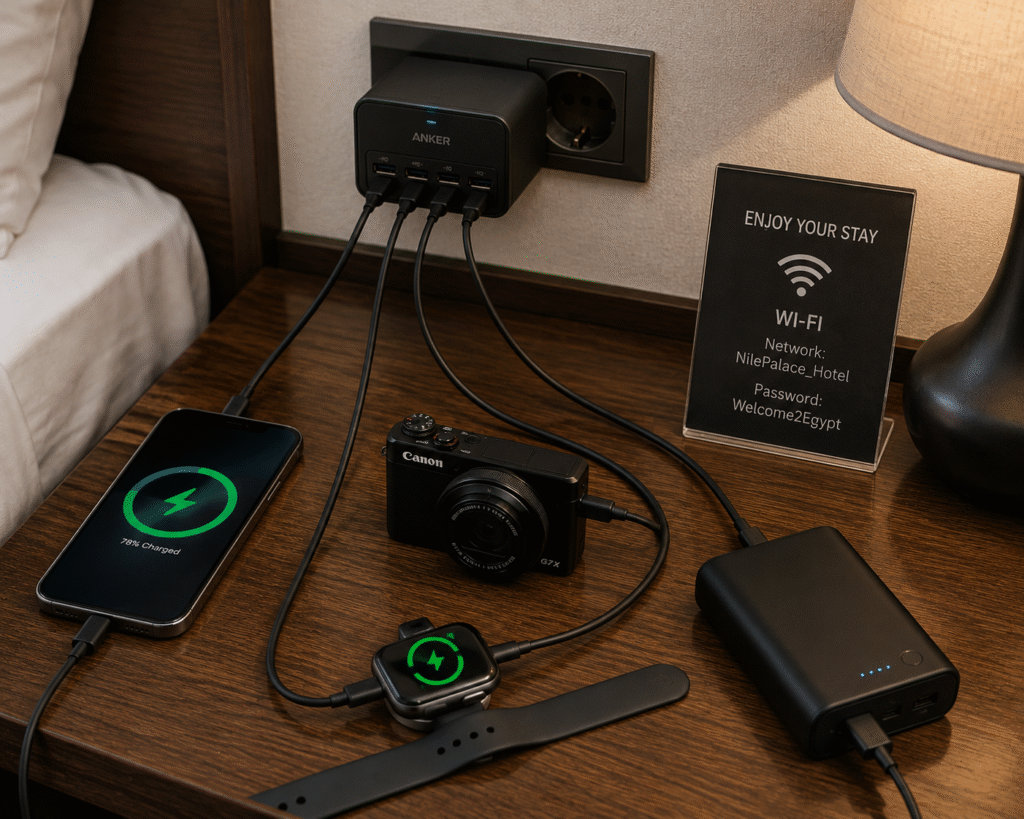
Rather than packing several individual chargers, many visitors prefer a compact USB charging hub that connects to a single travel adapter.
This reduces clutter and makes charging easier, particularly in hotel rooms with a limited number of electrical outlets.
Will Hotels Have Enough Power Outlets?
Most hotels in Egypt provide sufficient outlets for everyday travelers.
However, older hotels or historic buildings may have fewer sockets than newer properties.
If you expect to charge several devices overnight, bringing:
- A compact USB charging hub, or
- A universal adapter with multiple USB ports
can be more convenient than carrying multiple separate wall chargers.
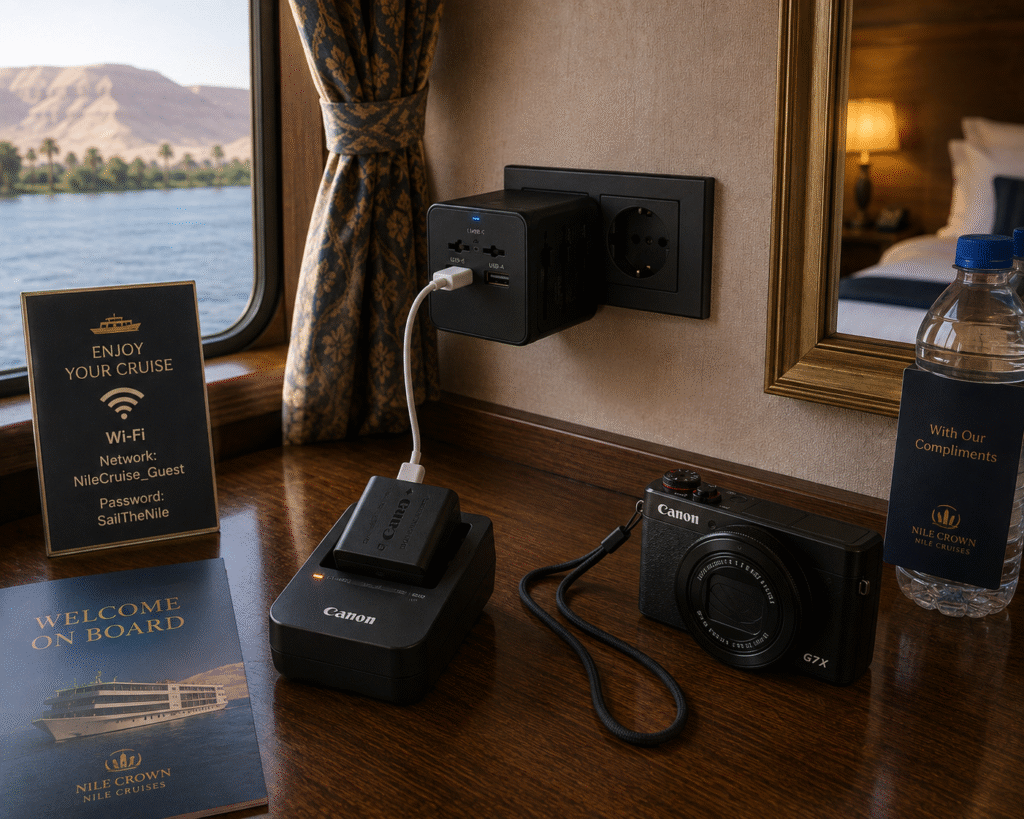
Can You Charge Devices on a Nile Cruise?
Yes.
Modern Nile cruise ships provide electricity in guest cabins using Egypt’s standard electrical system.
Cabins normally include one or more standard outlets suitable for charging phones, cameras, laptops, and other electronics.
If you’re spending several days on a cruise, bringing a power bank is useful for full-day sightseeing excursions when charging opportunities may be limited.
What About Power Cuts?
Egypt’s electricity supply is generally reliable in major tourist destinations.
Hotels, airports, museums, cruise ships, shopping malls, and larger businesses usually experience stable electrical service.
Occasional power interruptions can happen, particularly during periods of exceptionally high demand or in some local areas, but they are not something most visitors encounter frequently enough to affect their trip.
Carrying a charged power bank provides useful backup regardless of your destination.
Common Mistakes Visitors Make
The most common mistake is assuming every electronic device needs a voltage converter.
In reality, most modern phone, tablet, laptop, camera, and smartwatch chargers are already designed to work on 100–240V electricity. Many travelers spend money on converters they never actually need.
Another frequent mistake is forgetting to check whether a device is dual voltage before packing it. Hair dryers, curling irons, and other heating appliances are much more likely to require a converter than USB-powered electronics.
Some visitors also pack several individual chargers but only one wall outlet adapter. If you’re traveling with multiple devices, a universal adapter with USB ports or a compact charging hub is usually a much more practical solution.
Finally, don’t wait until you arrive in Egypt to discover that your phone charger doesn’t fit the socket. A quick check before departure takes only a minute and avoids unnecessary shopping after a long flight.
Frequently Asked Questions
What plug type does Egypt use?
Egypt uses Type C and Type F electrical outlets.
What voltage is used in Egypt?
Egypt operates on 230 volts with a frequency of 50Hz.
Will my phone charger work in Egypt?
Most likely, yes.
If your charger states Input: 100–240V, 50/60Hz, it is compatible with Egypt’s electrical system. You may only need a plug adapter.
Do I need a voltage converter?
Probably not.
Most modern electronics are dual voltage. Older appliances—particularly those that generate heat—may require a voltage converter if they only support 110–120V.
Should I buy a universal travel adapter?
Yes.
A universal adapter is useful not only for Egypt but also for future international trips. Models with multiple USB-A and USB-C ports are especially convenient if you’re traveling with several electronic devices.
Related Egyptian Nile Adventures Articles
Keeping your devices charged is just one part of preparing for your trip. These guides will help you get ready before you arrive.
Continue Planning Your Trip
- Egypt Packing List – Don’t forget chargers, adapters, electronics, and travel essentials.
- Egypt SIM Cards & Internet Guide – Stay connected with local SIM cards, eSIMs, and Wi-Fi.
- Travel Insurance Guide – Learn what your policy should cover before departure.
- Money in Egypt: Currency, ATMs & Credit Cards – Prepare your payment methods before traveling.
- Transportation in Egypt – Learn how to travel between Egypt’s major destinations.
- First-Time Visitor’s Guide to Egypt – A complete roadmap for planning your first trip.
Conclusion
Preparing your electronics for Egypt is one of the easiest parts of trip planning. Most travelers simply need the correct plug adapter, as modern phone, laptop, camera, and tablet chargers are already compatible with Egypt’s 230-volt electrical system.
Before you leave home, check your chargers, confirm whether your phone is unlocked if you’re planning to use a local SIM card, and pack a universal travel adapter along with a power bank for long sightseeing days. If you’re bringing older electrical appliances, verify that they support dual voltage or arrange a suitable converter before departure.
Spending a few minutes checking your equipment before your flight means you’ll arrive ready to keep your devices charged throughout your trip—whether you’re exploring the Pyramids of Giza, sailing the Nile, or relaxing on the Red Sea coast.
Learn more about international plug types and electrical standards.