What to Wear in Egypt: A Practical Guide for Every Season
One of the most common concerns among first-time visitors is what they should pack for Egypt. Many travelers wonder whether they need to dress conservatively, whether shorts are acceptable, or whether they’ll feel out of place wearing the same clothes they normally wear on holiday.
The good news is that there is no official dress code for tourists. Egypt welcomes millions of international visitors every year, and you’ll see a wide variety of clothing, particularly at major tourist attractions and Red Sea resorts.
That said, Egypt is also a socially conservative country in many respects. Understanding local customs doesn’t mean changing who you are—it simply helps you dress comfortably, respectfully, and appropriately for different situations.
The best approach is to pack lightweight, breathable clothing that keeps you cool while providing enough coverage for the climate, the sun, and the places you’ll visit.
Quick Answer
For most travelers:
- Wear lightweight, breathable clothing made from cotton or linen.
- Choose clothing that covers your shoulders and knees when visiting mosques or religious sites.
- Comfortable walking shoes are essential for archaeological sites.
- Bring a hat, sunglasses, and sunscreen throughout the year.
- Pack a light jacket or sweater if visiting during winter evenings.
- Red Sea beach resorts have a much more relaxed dress style than historic cities.
You don’t need to buy a completely new wardrobe before visiting Egypt. Most visitors simply dress a little more modestly than they might for a beach holiday elsewhere.
Understanding Dress Culture in Egypt
One of the biggest misconceptions about Egypt is that tourists are expected to dress according to strict rules everywhere they go.
In reality, clothing expectations depend largely on where you are.
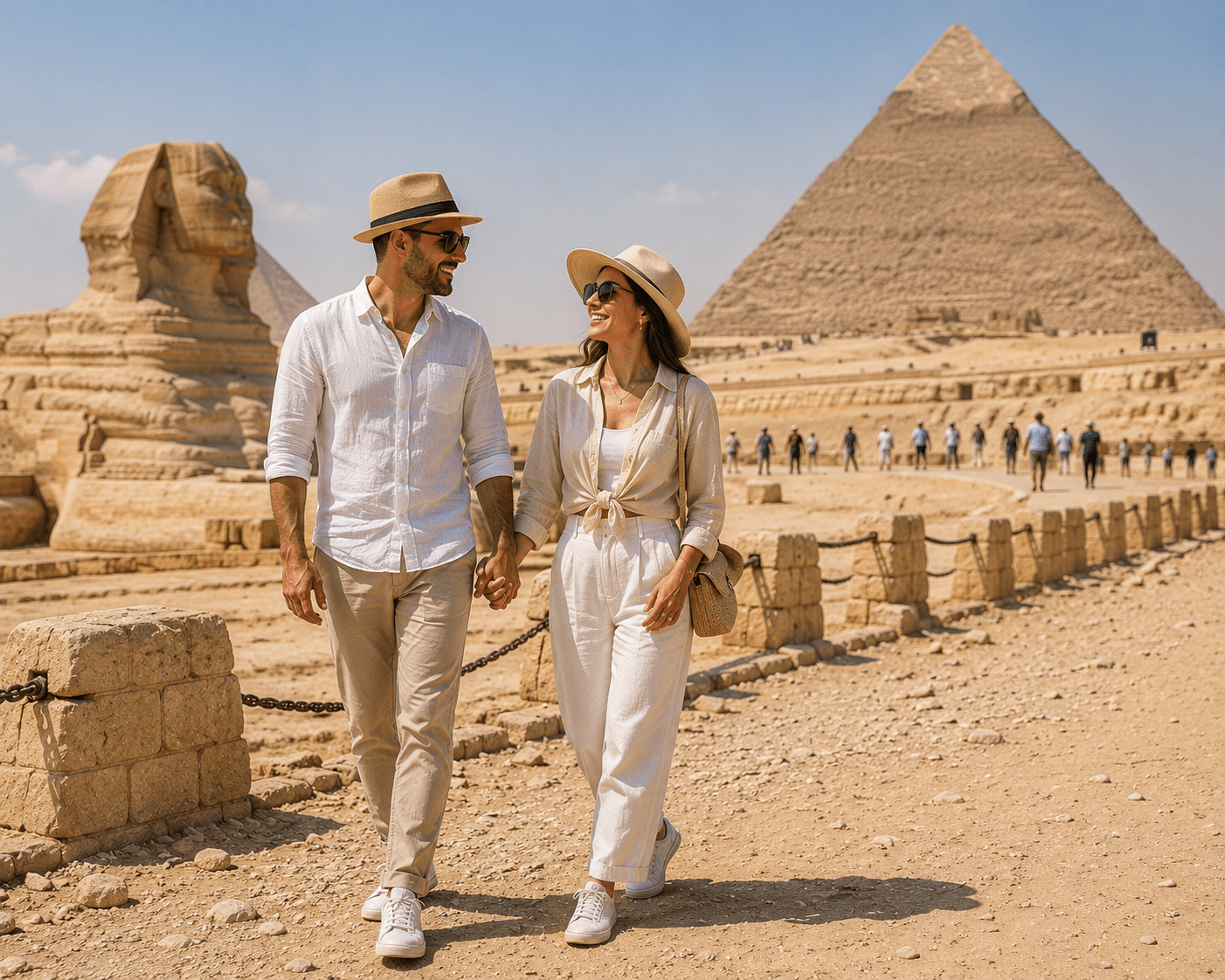
At the Pyramids of Giza, the Grand Egyptian Museum, Luxor Temple, or on a Nile cruise, you’ll see visitors from around the world wearing practical sightseeing clothes suited to the weather.
In local neighborhoods, traditional markets, rural villages, and religious sites, however, more modest clothing tends to be the norm.
Dressing respectfully isn’t about avoiding trouble—it’s about recognizing local customs in the same way you would when visiting churches in Italy or temples in Japan.
Most travelers find that clothing offering a little more coverage also provides better protection from Egypt’s strong sunshine.
What Women Should Wear
Female visitors often ask whether they need to wear a headscarf in Egypt.
For everyday sightseeing, the answer is no.
Women are not expected to cover their hair when visiting archaeological sites, museums, hotels, restaurants, or walking around tourist areas.
However, a scarf becomes useful when entering mosques where head coverings may be requested.
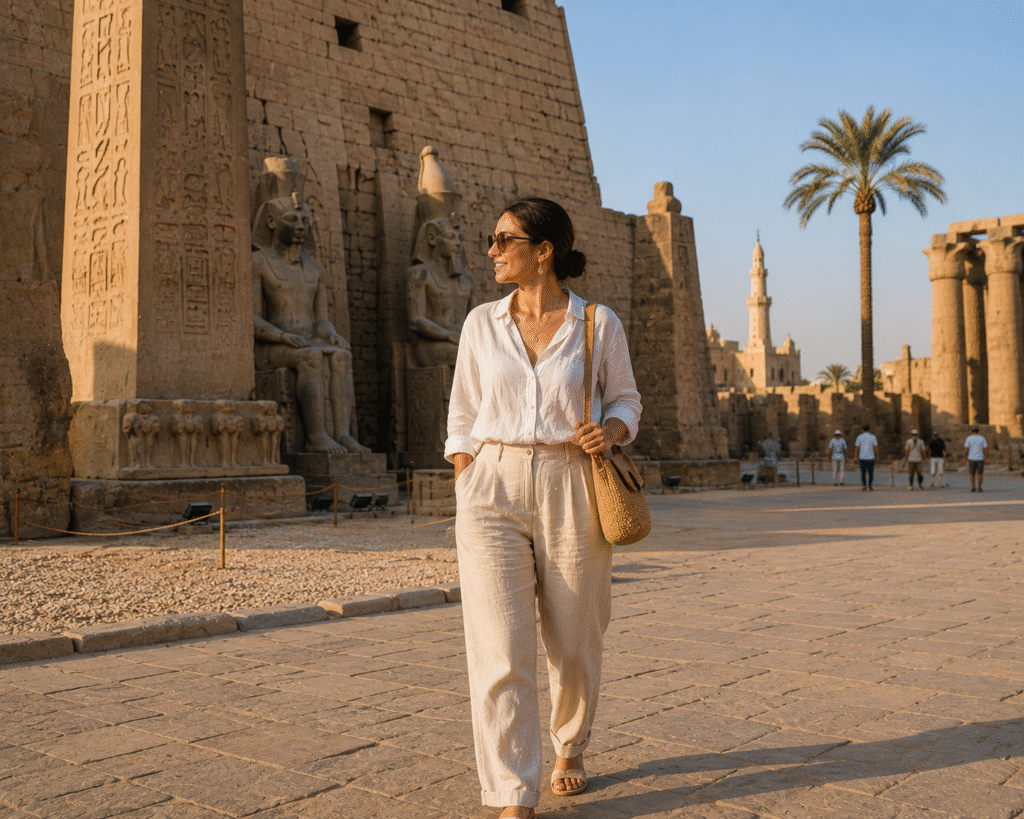
Lightweight dresses, loose trousers, linen pants, maxi skirts, T-shirts, blouses, and breathable long-sleeved shirts are all common choices for visitors.
Many women prefer clothing that covers the shoulders and reaches at least the knees—not because it’s legally required, but because it generally attracts less attention and provides better protection from the sun.
Very revealing clothing is uncommon outside beach resorts and may make you feel uncomfortable rather than helping you stay cool.
What Men Should Wear
Men have considerably more flexibility than many expect.
Short-sleeved shirts, polo shirts, lightweight trousers, chinos, and knee-length shorts are commonly seen at major tourist attractions.
Very short athletic shorts or shirtless sightseeing are generally inappropriate outside hotel pools and beach resorts.
Loose-fitting natural fabrics remain the most comfortable option during Egypt’s hotter months.
For evenings at upscale hotels or restaurants, smart casual clothing is usually sufficient.
What to Wear at Religious Sites
Mosques are among Egypt’s most beautiful buildings, and many welcome visitors outside prayer times.
Because they remain active places of worship, modest clothing is expected.
Both men and women should wear clothing covering the shoulders and knees.
Women may also be asked to cover their hair before entering. Carrying a lightweight scarf in your day bag is an easy solution and takes up very little space.
Shoes are normally removed before entering the prayer hall, so wearing footwear that’s easy to remove can make your visit more convenient.
Unlike archaeological sites, religious buildings should be approached primarily as places of worship rather than tourist attractions.
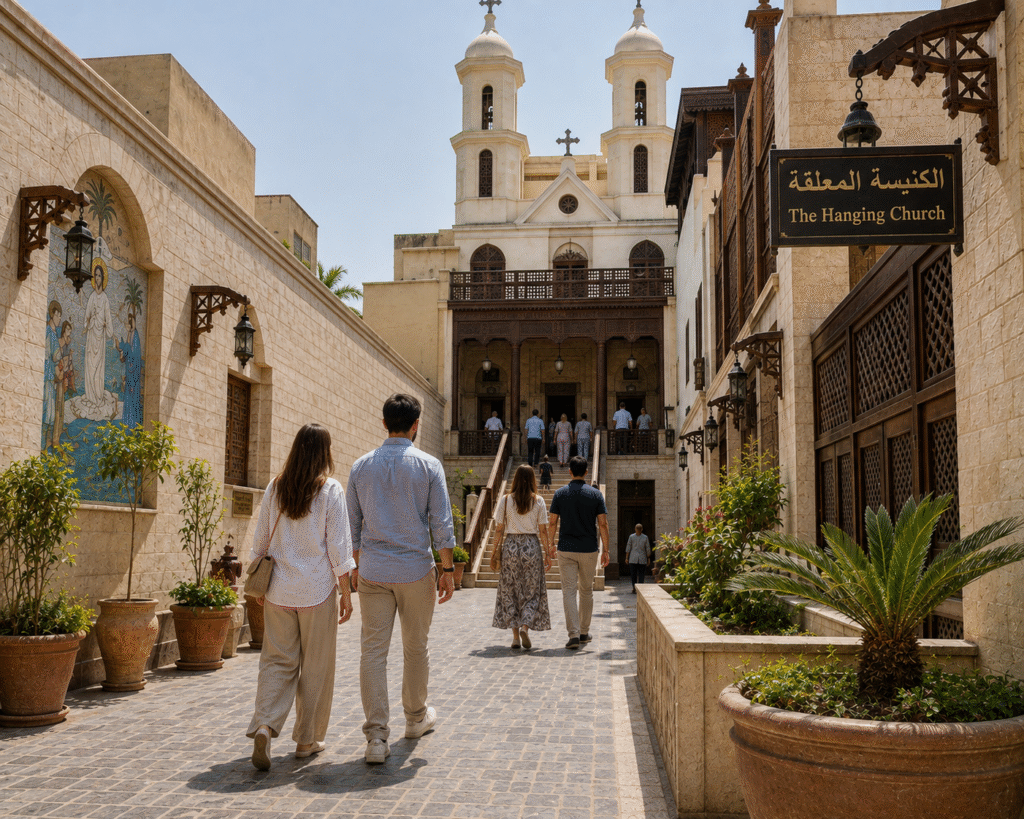
Coptic churches and monasteries also deserve the same respectful approach. At sites such as the Hanging Church, Saints Sergius and Bacchus Church, and other churches in Coptic Cairo, visitors should choose modest clothing that covers the shoulders and knees. Women are not normally required to cover their hair, and visitors generally keep their shoes on unless instructed otherwise. Remember that these are active places of Christian worship, so keep voices low, avoid interrupting services or prayer, and follow any restrictions on photography, particularly around altars, icons, or during services.
What to Wear at the Pyramids and Archaeological Sites
Comfort is far more important than fashion.
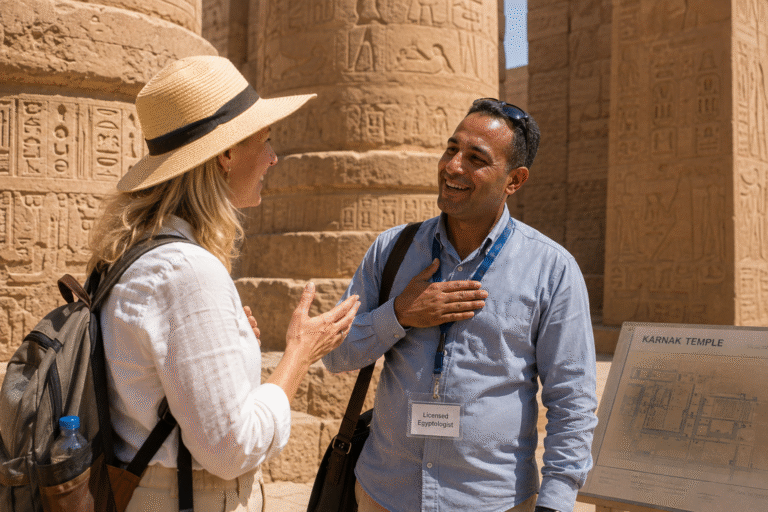
The Giza Plateau, Saqqara, Karnak Temple, the Valley of the Kings, Abu Simbel, and many other archaeological sites involve uneven ground, stone pathways, stairs, and long periods of walking in direct sunlight.
Good walking shoes or supportive trainers are one of the best items you can pack.
Flip-flops may be comfortable around hotel pools, but they’re generally unsuitable for full sightseeing days.
A wide-brimmed hat, sunglasses, and lightweight long sleeves often provide more comfort than relying solely on sunscreen.
Dressing for the Weather
Egypt’s climate changes more than many visitors expect.
Summer temperatures can exceed 40°C (104°F) in Upper Egypt, while winter mornings and evenings—particularly in the desert—may feel surprisingly cool.
Layering is therefore more useful than packing heavy clothing.
Breathable fabrics remain comfortable during the day, while a light sweater or jacket is often enough after sunset during the cooler months.
Rather than packing thick clothing, it’s usually better to bring several lighter layers that can easily be added or removed throughout the day.
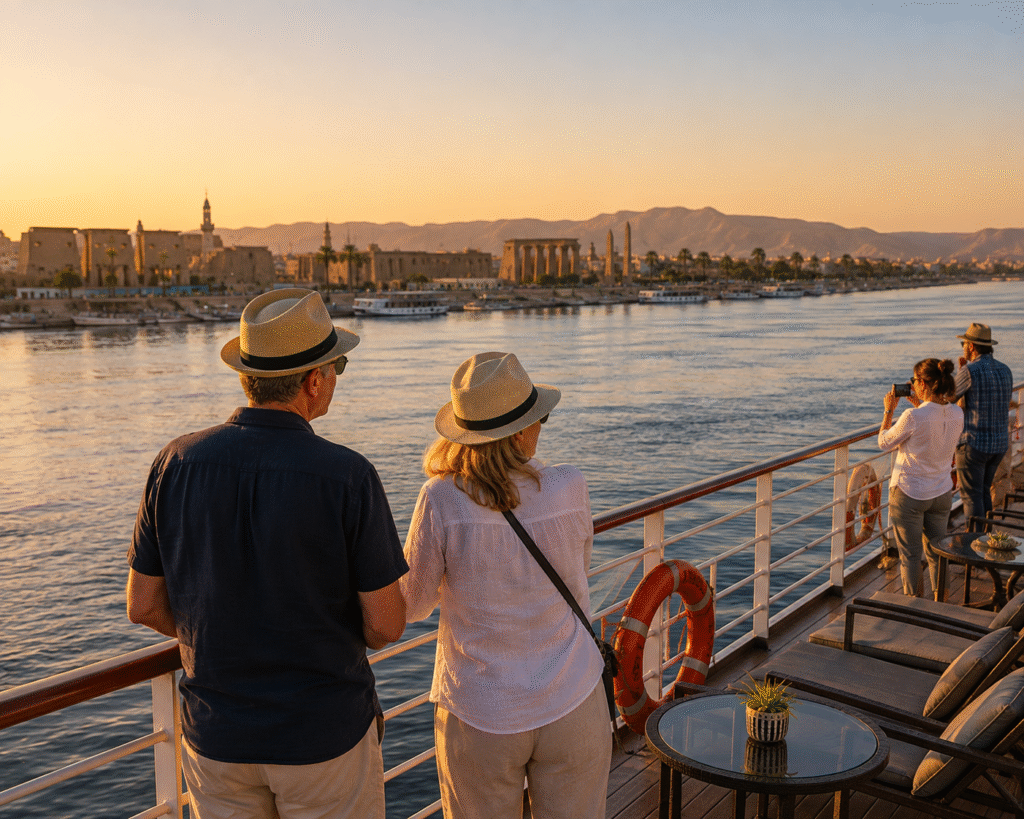
What to Wear on a Nile Cruise
A Nile cruise is generally more relaxed than many first-time visitors expect.
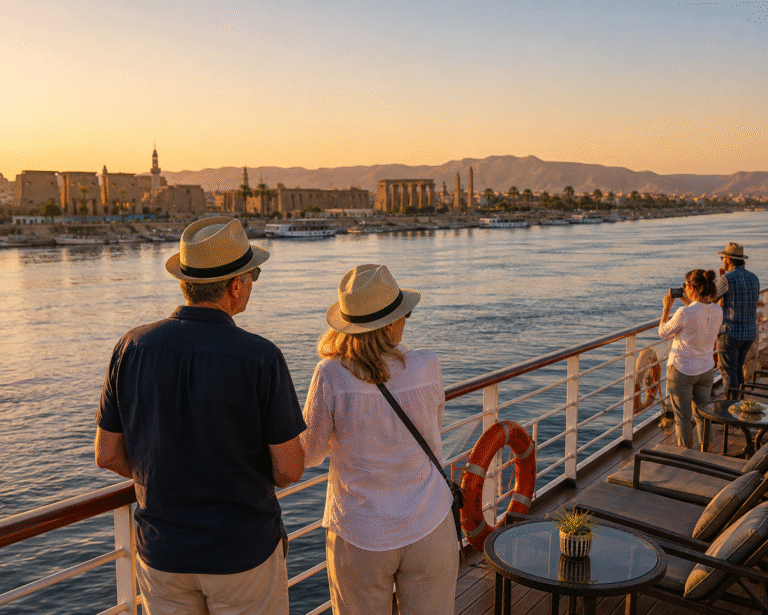
During the day, passengers typically wear the same comfortable clothing they use while sightseeing—lightweight shirts, breathable trousers or shorts, comfortable walking shoes, hats, and sunglasses for excursions.
When the ship returns in the afternoon, many guests change into casual evening clothes for dinner. There is usually no formal dress code on standard Nile cruises, although some higher-end vessels may host an optional “Galabeya Night” or similar themed evening where guests are invited—but not required—to wear traditional Egyptian clothing.
Smart casual attire is perfectly appropriate for most evenings. Men often wear polo shirts or lightweight button-up shirts with trousers or chinos, while women commonly choose casual dresses, skirts, or comfortable trousers with a blouse.
What to Wear at Red Sea Resorts
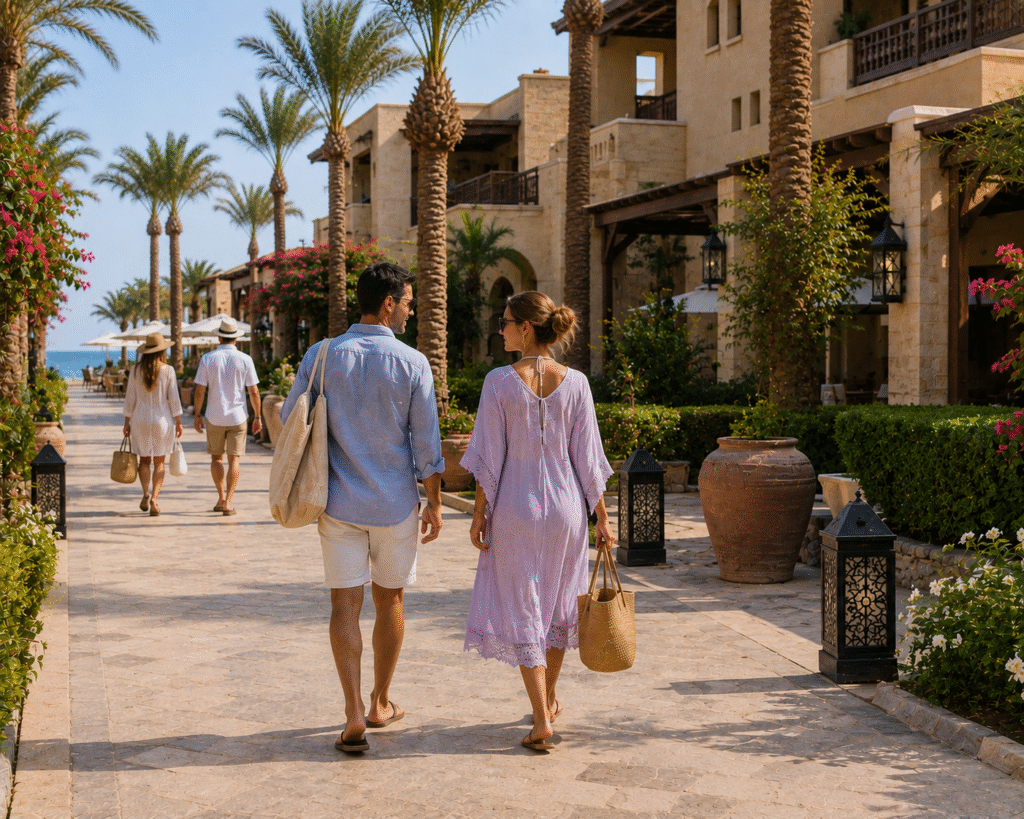
Hurghada, Sharm El Sheikh, Marsa Alam, and other Red Sea destinations have a noticeably more relaxed atmosphere than Egypt’s historic cities.
Swimwear is completely normal at hotel pools and private beaches.
Away from these areas, however, it’s considerate to cover up before walking through hotel lobbies, restaurants, shopping areas, or public streets.
A lightweight cover-up, T-shirt, or sundress is usually all that’s needed.
The contrast sometimes surprises visitors. Clothing that’s perfectly acceptable on a private beach may feel out of place while visiting a local market only a few minutes away.
Seasonal Clothing Guide
Choosing the right clothing depends as much on the season as the destination.
| Season | What to Pack |
|---|---|
| Spring (March–May) | Lightweight clothing, sun hat, sunglasses, light jacket for evenings |
| Summer (June–August) | Linen or cotton clothing, wide-brimmed hat, sunglasses, breathable footwear, sunscreen |
| Autumn (September–November) | Similar to spring with lightweight layers for cooler evenings |
| Winter (December–February) | Lightweight daytime clothing, sweater or fleece for evenings, light waterproof jacket if visiting the Mediterranean coast |
Egypt enjoys sunshine throughout most of the year, so sun protection remains important in every season.
Footwear Matters More Than Most People Expect
Visitors often focus on clothing while overlooking footwear.
You’ll spend far more time walking than many first-time travelers anticipate.
Large archaeological sites such as Karnak Temple, the Grand Egyptian Museum, Saqqara, Abu Simbel, and the Valley of the Kings involve extensive walking across stone paths, uneven surfaces, and sandy ground.
Comfortable tennis shoes or supportive walking shoes are usually the best choice.
Sandals can work for lighter sightseeing days, particularly in coastal resorts, but they provide less support for long visits to archaeological sites.
High heels are generally impractical for sightseeing and many historic locations.
Accessories Worth Packing
Some of the most useful items take up very little space in your suitcase.
Consider bringing:
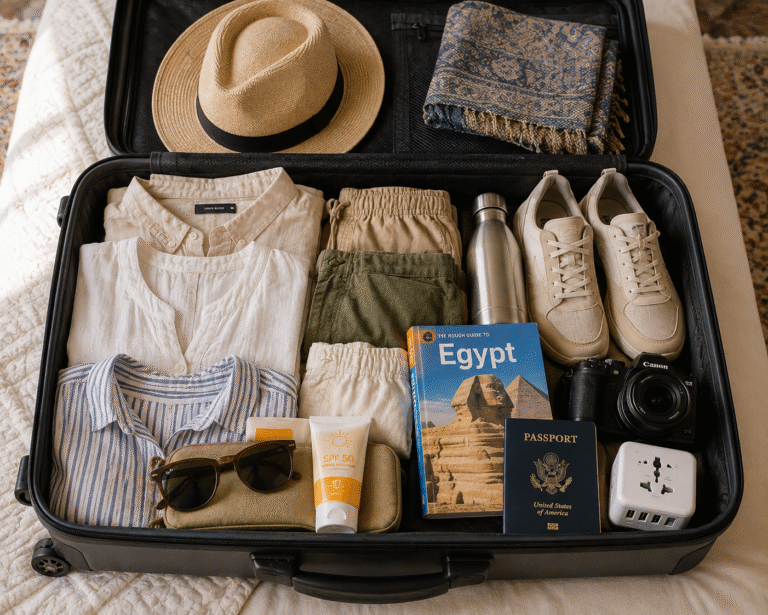
- A wide-brimmed hat or cap.
- UV-protection sunglasses.
- Lightweight scarf (especially for mosque visits).
- Refillable water bottle.
- Small daypack.
- High-SPF sunscreen.
- Lip balm with sun protection.
These accessories often contribute more to your comfort than packing additional clothing.
Clothing to Avoid
Very little clothing is completely inappropriate for tourists, but some items are less practical than others.
For most visitors, it’s best to avoid:
- Heavy denim during summer.
- Very revealing clothing in cities and traditional neighborhoods.
- Extremely short shorts away from beach resorts.
- High heels for sightseeing.
- Flip-flops at archaeological sites.
- Dark heavy fabrics during the hottest months.
The goal isn’t to follow strict rules—it’s simply to stay comfortable while respecting the places you’re visiting.
Common Clothing Mistakes
One of the most common mistakes is packing only summer clothing.
Even visitors arriving in winter often expect constant heat, only to discover that mornings, evenings, and Nile cruises can feel surprisingly cool. A lightweight sweater or jacket usually solves the problem without taking up much luggage space.
Another mistake is choosing fashion over practicality. New sandals, uncomfortable shoes, or heavy clothing quickly become frustrating during long days exploring archaeological sites.
Some travelers also assume they need to dress much more conservatively than necessary. While respectful clothing is appreciated, tourists are not expected to dress exactly like local residents. Comfortable, modest sightseeing clothes are perfectly appropriate throughout most of the country.
Finally, many visitors underestimate the Egyptian sun. Clothing that covers the shoulders and arms is often cooler than exposing skin directly to several hours of intense sunshine.
Frequently Asked Questions
Do women need to wear a hijab in Egypt?
No.
Female tourists are not expected to cover their hair during everyday sightseeing. A lightweight scarf is only useful when visiting mosques where head coverings may be requested.
Can tourists wear shorts in Egypt?
Yes.
Shorts are common at tourist attractions, resorts, and on Nile cruises. Knee-length shorts are generally more versatile than very short athletic styles, particularly in cities and traditional neighborhoods.
What shoes are best for Egypt?
Comfortable walking shoes or supportive trainers are the best choice for most sightseeing. Many archaeological sites involve uneven ground, stone paths, and extensive walking.
Is there a dress code at the Pyramids?
No official dress code exists for visitors to the Giza Plateau or other archaeological sites. Practical, lightweight clothing suitable for walking in hot weather is recommended.
What should I wear when visiting a mosque?
Wear clothing that covers your shoulders and knees. Women should carry a lightweight scarf in case head covering is requested, and all visitors should expect to remove their shoes before entering the prayer area.
Related Egyptian Nile Adventures Articles
Choosing the right clothing is just one part of preparing for your trip. These guides will help you plan with confidence.
Continue Planning Your Trip
- Egypt Packing List – A complete checklist of what to bring for your trip.
- Best Time to Visit Egypt – Understand how the weather changes throughout the year.
- Is Egypt Safe for Tourists? – Practical advice for staying safe and comfortable while traveling.
- Money in Egypt: Currency, ATMs & Credit Cards – Learn how to manage cash and card payments.
- Transportation in Egypt – Compare flights, trains, taxis, ride-hailing apps, and Nile cruises.
- First-Time Visitor’s Guide to Egypt – A complete roadmap for planning your first trip.
Conclusion
Packing for Egypt is much simpler than many first-time visitors expect. You don’t need special clothing or an entirely new wardrobe. Lightweight, breathable fabrics, comfortable walking shoes, and sensible sun protection will serve you well throughout most of the country.
The key is dressing for both the climate and the setting. What works perfectly at a Red Sea resort may not be the best choice for a mosque or a traditional neighborhood, just as comfortable trainers are a better investment than fashionable shoes when exploring Egypt’s archaeological sites.
By packing practical clothing that respects local customs without sacrificing comfort, you’ll be well prepared for everything from climbing the steps of ancient temples to enjoying dinner aboard a Nile cruise.
Visitor information from Egypt’s Ministry of Tourism and Antiquities.