Drinking Water in Egypt: Is the Tap Water Safe for Tourists?
One of the first questions many travelers ask before visiting Egypt is whether it’s safe to drink the tap water.
The simple answer is that most visitors should stick to bottled or properly filtered drinking water throughout their trip.
Although tap water in many parts of Egypt is treated and supplied through municipal water systems, differences in local water quality, mineral content, plumbing, and the microorganisms your body is accustomed to can cause stomach upset in some visitors. Even when the water meets local standards, your digestive system may react differently than it does at home.
Fortunately, safe drinking water is inexpensive, widely available, and easy to find throughout Egypt.
Quick Answer
For most visitors:
- Drink sealed bottled water or water from a trusted filtered source.
- Avoid drinking tap water.
- Use bottled water when brushing your teeth if you have a sensitive stomach or prefer extra precaution.
- Ice served at reputable hotels and restaurants is generally safe, but if you’re unsure, simply ask.
- Staying hydrated is especially important during Egypt’s hot weather.
Can Tourists Drink Tap Water in Egypt?
Most travel health authorities recommend that visitors avoid drinking tap water during their stay in Egypt.
This recommendation isn’t necessarily because the water is unsafe by local standards. Instead, visitors may be more sensitive to unfamiliar microorganisms or the different mineral composition of the water, increasing the chance of stomach discomfort during their holiday.
For a short vacation, bottled water is the simplest and most reliable choice.
Is Bottled Water Easy to Find?
Yes.
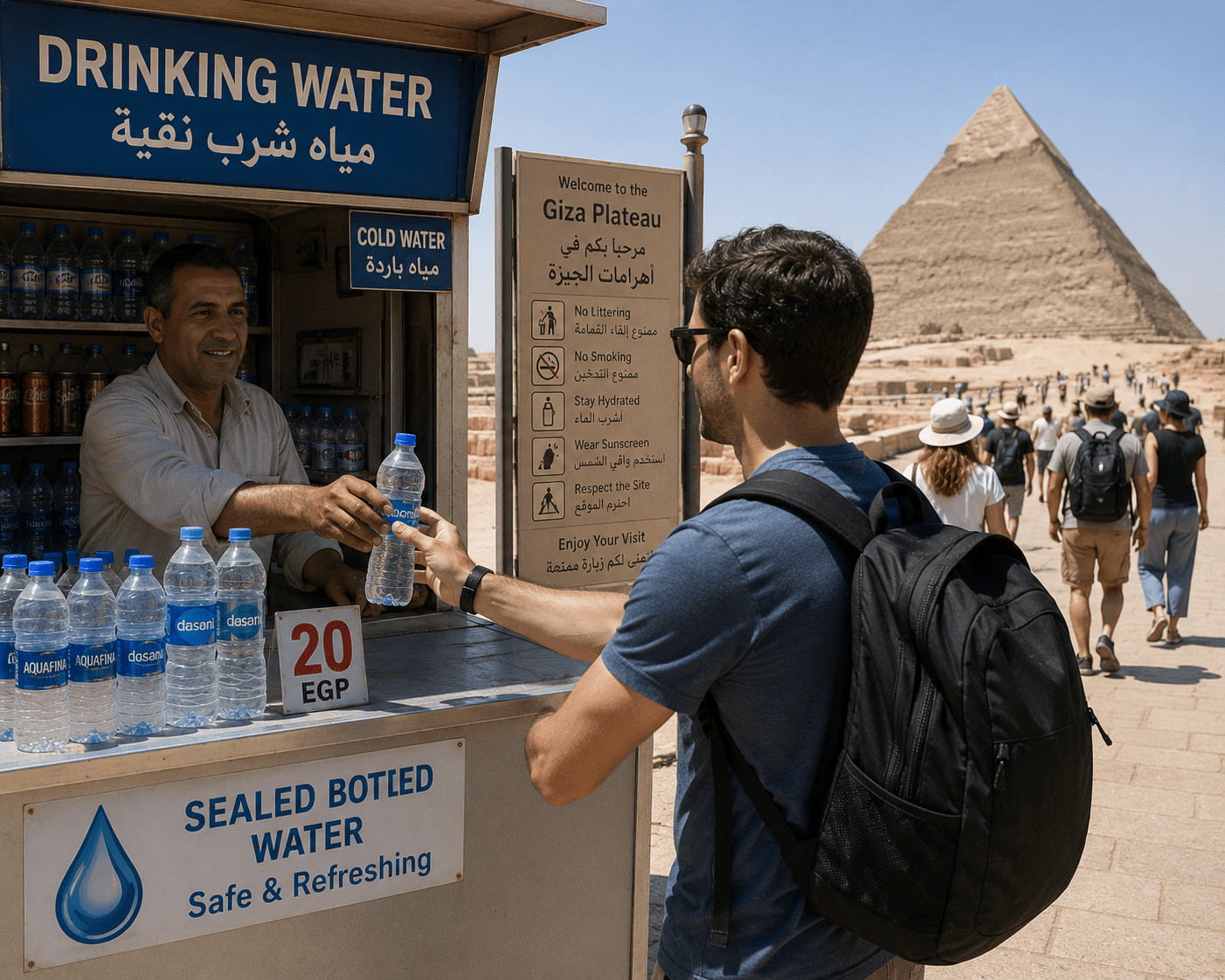
Bottled drinking water is available almost everywhere tourists travel in Egypt.
You’ll find it in:
- Hotels
- Supermarkets
- Convenience stores
- Restaurants
- Cafés
- Airports
- Museums
- Tourist attractions
- Petrol stations
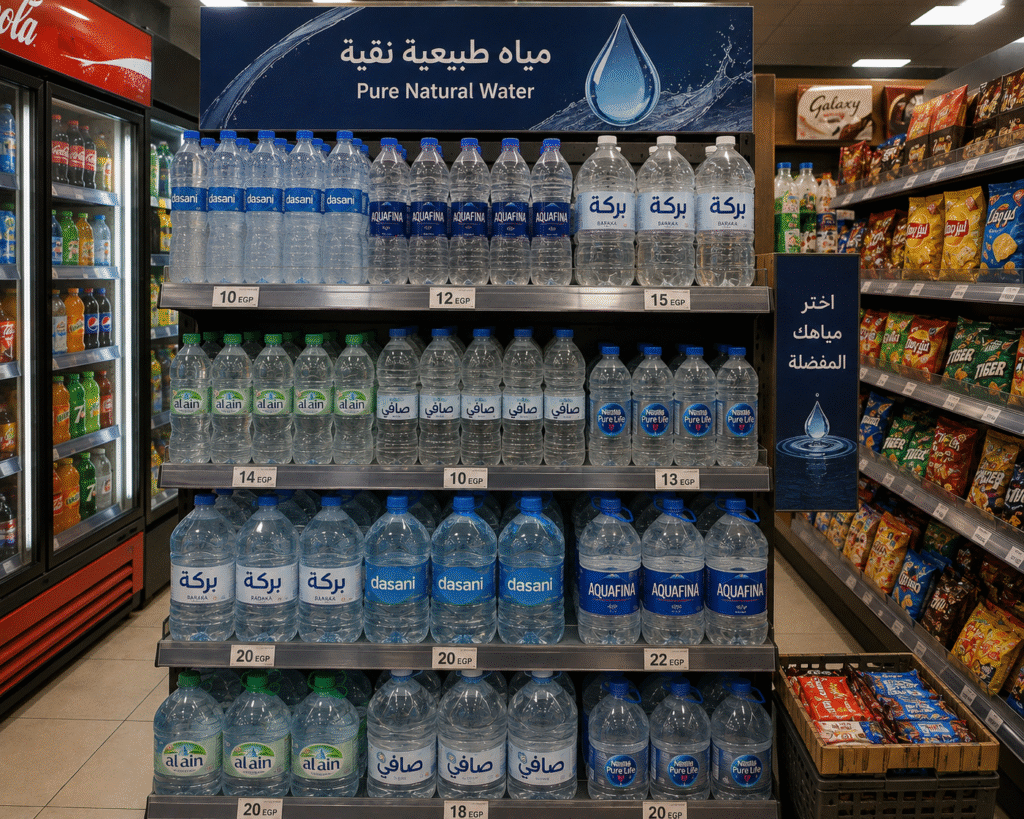
Major Egyptian bottled water brands are widely available, and international brands can also be found in many larger supermarkets and hotels.
Because bottled water is inexpensive, most travelers simply purchase a few bottles each day as needed.
How to Buy Bottled Water Safely
Buying bottled water in Egypt is straightforward, but there are a few simple habits worth following.
Always:
- Check that the bottle’s seal is intact.
- Buy from reputable shops, supermarkets, hotels, or restaurants.
- Avoid bottles that appear damaged or previously opened.
These precautions are sensible anywhere in the world and help ensure you’re receiving unopened bottled water.
Should You Brush Your Teeth with Tap Water?
Many visitors choose to brush their teeth using bottled water, particularly during their first few days in Egypt or if they have a sensitive stomach.
Others use tap water without experiencing any problems.
For most tourists, using bottled water for brushing your teeth is a simple precaution that requires very little extra effort.
What About Ice?
Ice often causes more concern than tap water itself.
At reputable hotels, international restaurants, higher-end cafés, and established tourism businesses, ice is generally produced using treated or filtered water and is usually considered safe.
If you’re eating at a smaller establishment and are uncertain about how the ice was made, it’s perfectly reasonable to request your drink without ice.
The decision ultimately comes down to your own comfort level and the type of establishment you’re visiting.
Can You Eat Salad and Fruit?
Fresh fruit that you peel yourself—such as bananas, oranges, or mandarins—is generally a safe choice.
Salads and raw vegetables are commonly served in restaurants throughout Egypt, particularly at reputable establishments catering to both local residents and visitors.
If you have a particularly sensitive stomach or are eating somewhere where food hygiene appears questionable, you may prefer cooked vegetables instead.
As with any international destination, choosing restaurants with good hygiene standards is usually more important than avoiding specific foods.
Staying Hydrated
One of the biggest challenges visitors face isn’t unsafe water—it’s not drinking enough.
Egypt’s climate, particularly between late spring and early autumn, can lead to dehydration much more quickly than many travelers expect.
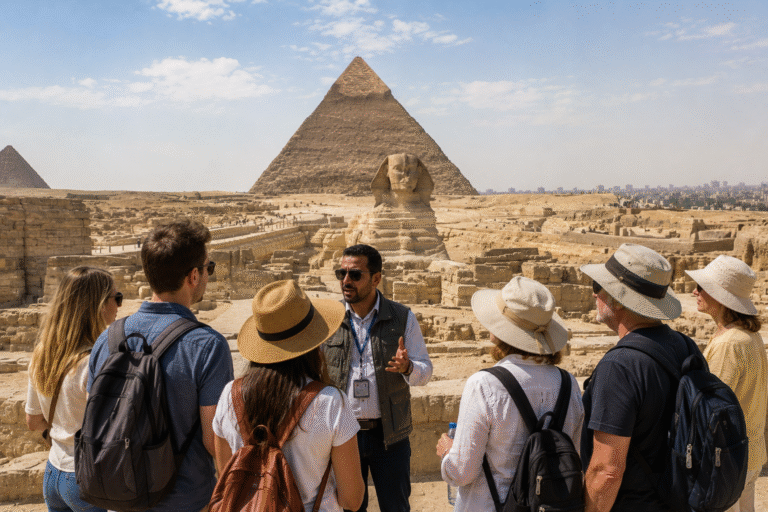
This is especially true when spending several hours outdoors at sites such as:
- The Pyramids of Giza
- Saqqara
- Karnak Temple
- Valley of the Kings
- Abu Simbel
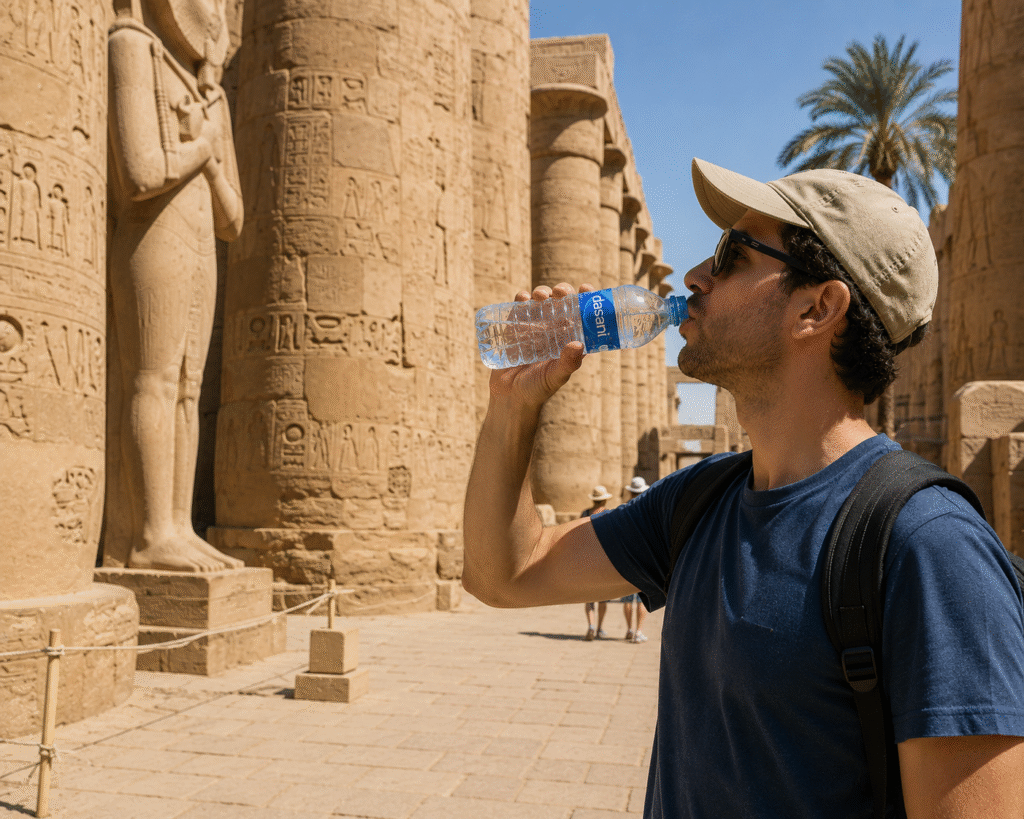
Carry water with you throughout the day and drink regularly, even if you don’t feel thirsty.
Waiting until you’re already thirsty often means you’re beginning to dehydrate.
Refillable Water Bottles
Many travelers prefer bringing a reusable water bottle for sightseeing.
If you choose to do so, fill it using:
- Bottled water.
- Water from a trusted filtered source.
Avoid refilling reusable bottles directly from the tap unless you’re confident the water has been properly filtered or treated.
Using a refillable bottle can reduce plastic waste while still allowing you to stay hydrated throughout the day.
Can You Drink Tea and Coffee?
Yes.
Tea and coffee served in hotels, cafés, and restaurants are generally safe because the water is boiled during preparation.
Egypt has a long tradition of tea and coffee drinking, and you’ll find both served almost everywhere you travel.
Popular drinks include:
- Black tea (Shai)
- Mint tea
- Turkish-style coffee
- Espresso-based drinks
- Fresh juices (prepared to order)
If you’re ordering fresh juice from a smaller vendor, choose a busy stall where ingredients appear fresh and hygienically prepared.
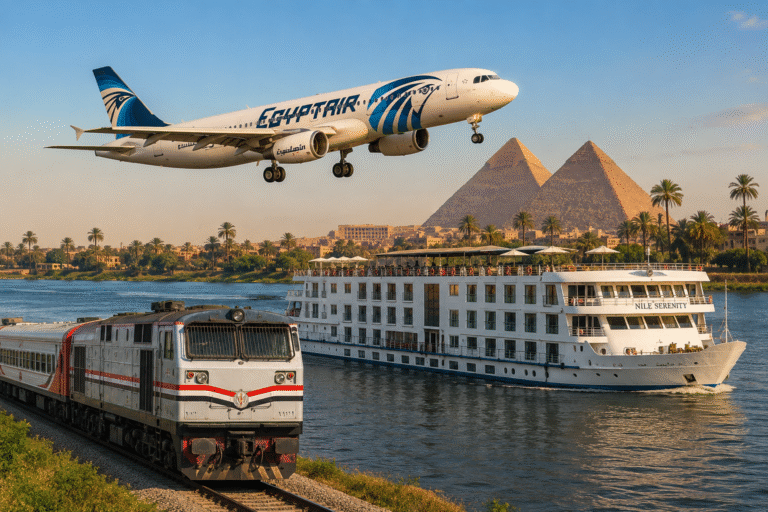
Water on Nile Cruises
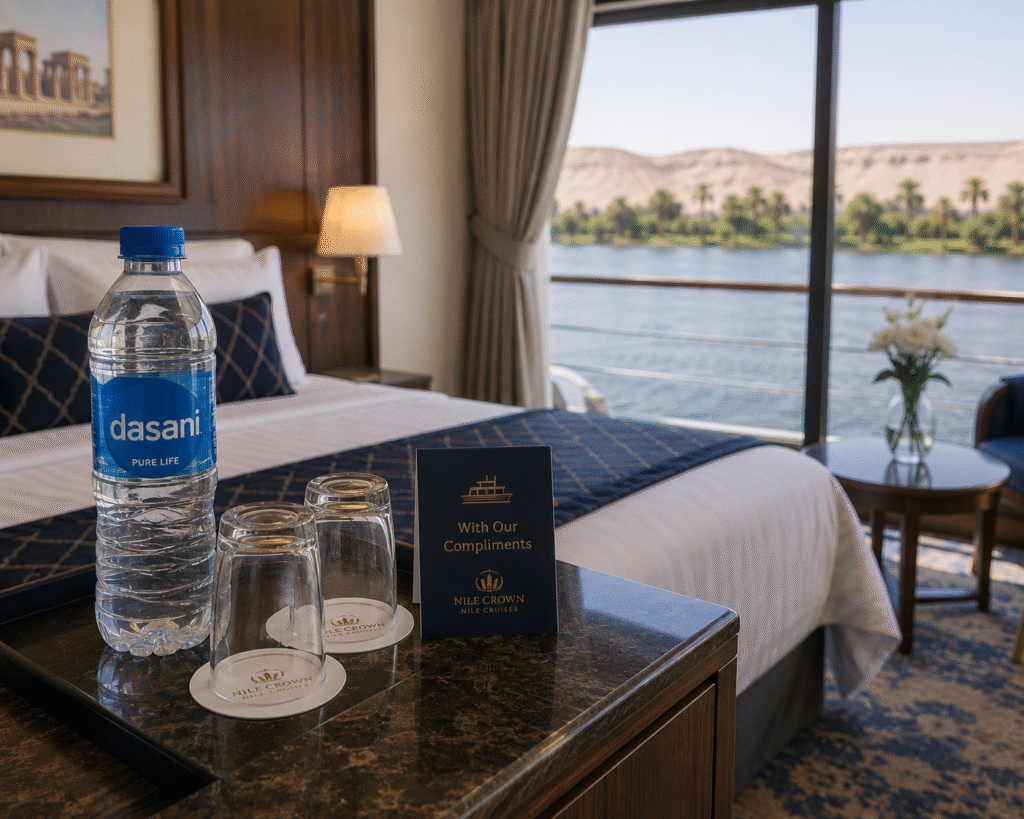
Modern Nile cruise ships provide bottled drinking water, and many also offer filtered water stations or bottled water for purchase.
Tap water in cabin bathrooms is intended for washing rather than drinking.
If you’re spending several days on a cruise, keeping a bottle of water in your cabin and taking one with you on daily excursions is a simple way to stay hydrated while visiting archaeological sites.
What About Desert Tours?
If you’re joining a desert safari or visiting remote areas such as the White Desert, Black Desert, or Siwa Oasis, your tour operator will normally provide drinking water as part of the excursion.
Even so, it’s a good idea to carry additional bottled water, particularly during warmer months.
Desert conditions can lead to dehydration much faster than visitors expect, and water may not be readily available once you’re away from towns.
Common Mistakes Visitors Make
One of the biggest mistakes is waiting until you’re thirsty before drinking water.
Egypt’s dry climate means you lose fluids more quickly than you might notice, especially while walking around large archaeological sites in direct sunshine.
Another common mistake is assuming bottled water will always be available exactly when you need it. While it’s widely sold throughout Egypt, buying a bottle before leaving your hotel each morning is a simple habit that avoids unnecessary inconvenience.
Some travelers also avoid drinking enough water because they don’t want to stop frequently. In Egypt’s climate, staying hydrated is far more important than trying to avoid restroom breaks.
Finally, don’t forget that dehydration isn’t limited to summer. Winter visitors can also become dehydrated during long days of sightseeing without realizing it.
Frequently Asked Questions
Is bottled water safe in Egypt?
Yes.
Sealed bottled water from reputable brands is the option most international visitors choose throughout their trip.
Can I brush my teeth with tap water?
Many visitors prefer using bottled water, particularly if they have a sensitive stomach or simply want extra peace of mind during a short holiday.
Is ice safe in Egypt?
At reputable hotels, restaurants, and cafés, ice is generally made from treated or filtered water and is usually considered safe.
If you’re unsure, asking for your drink without ice is a simple precaution.
Can I refill my reusable water bottle?
Yes—but use bottled water or a trusted filtered source rather than refilling directly from the tap.
How much water should I drink while sightseeing?
There isn’t a single amount that’s right for everyone, but you should drink regularly throughout the day, particularly during warmer months and when visiting outdoor archaeological sites.
Related Egyptian Nile Adventures Articles
Knowing what to drink is just one part of staying healthy and comfortable during your trip. These guides will help you prepare for the rest of your visit.
Continue Planning Your Trip
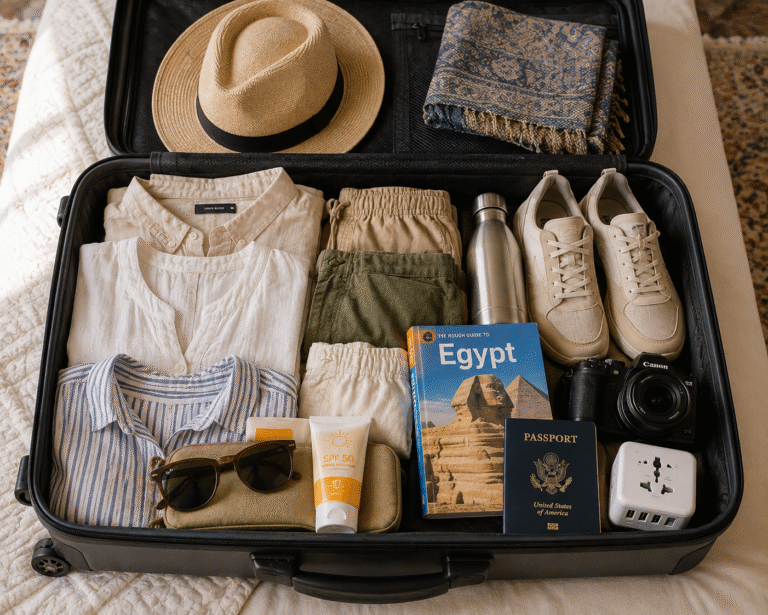
- Egypt Packing List – Pack reusable water bottles, sunscreen, and other sightseeing essentials.
- What to Wear in Egypt – Dress comfortably for Egypt’s climate.
- Is Egypt Safe for Tourists? – Practical health and safety advice for first-time visitors.
- Travel Insurance Guide – Understand what medical coverage you should have before traveling.
- Money in Egypt: Currency, ATMs & Credit Cards – Budget for everyday purchases such as bottled water and snacks.
- First-Time Visitor’s Guide to Egypt – A complete planning guide for your first trip.
Conclusion
For most visitors, staying hydrated in Egypt is simple. Choosing sealed bottled water or water from a trusted filtered source is the easiest way to avoid unnecessary stomach problems while traveling.
Safe drinking water is widely available throughout the country’s main tourist destinations, and taking a few sensible precautions—such as checking bottle seals, carrying water during sightseeing, and drinking regularly in the heat—allows you to focus on enjoying your trip rather than worrying about what to drink.
Most travelers experience no difficulties at all. With bottled water readily available in hotels, restaurants, supermarkets, and tourist attractions, staying hydrated throughout your Egypt itinerary is both easy and inexpensive.
Learn more about safe drinking water and international public health guidance.