Egypt Packing List
Egypt Packing List: What to Pack for Your Trip to Egypt
Packing for Egypt is simpler than many first-time visitors expect. You don’t need specialist travel gear or an entirely new wardrobe. The most important considerations are staying comfortable in the climate, protecting yourself from the sun, and bringing practical items that make sightseeing easier.
Many travelers either overpack—bringing heavy clothing they never wear—or underpack by forgetting essentials such as comfortable walking shoes, sun protection, or a universal travel adapter.
This guide focuses on what you’ll actually use during a typical trip to Egypt, whether you’re spending a few days in Cairo, taking a Nile cruise, relaxing at the Red Sea, or combining several destinations into one itinerary.
Quick Answer
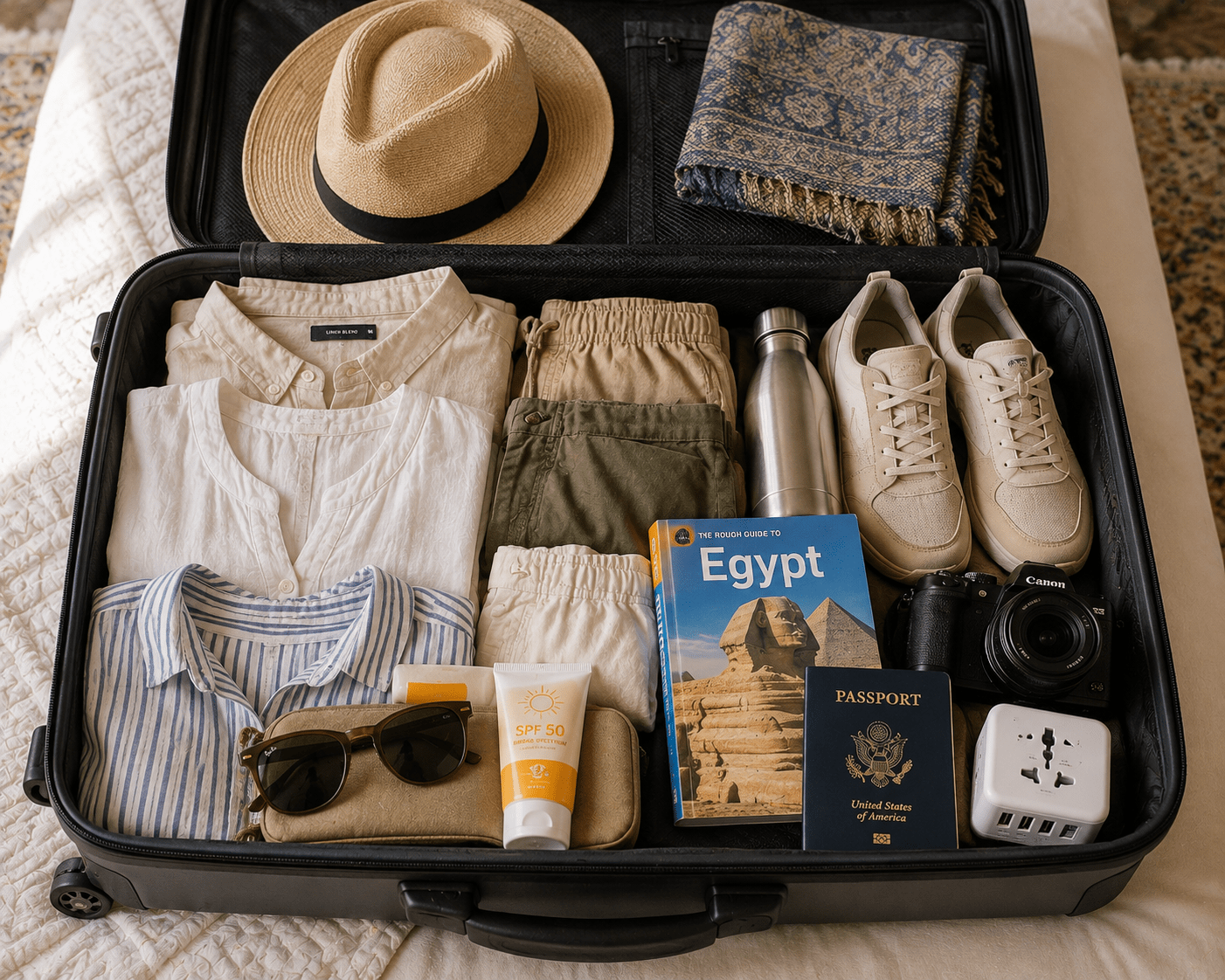
For most visitors, your suitcase should include:
- Lightweight, breathable clothing
- Comfortable walking shoes
- Hat and sunglasses
- High-SPF sunscreen
- Refillable water bottle
- Universal travel adapter
- Power bank
- Lightweight scarf (especially for mosque visits)
- Basic medications
- Copies of important travel documents
Most items you forget can be purchased in Egypt, but bringing the essentials saves both time and money.
Before You Start Packing
Before filling your suitcase, think about the type of trip you’re taking.
Someone spending a week exploring Cairo, Luxor, and Aswan will pack differently from someone relaxing at a Red Sea resort.
Likewise, winter visitors need a light jacket for cooler evenings, while summer travelers should focus on lightweight clothing and sun protection.
Rather than packing for every possible situation, pack for your actual itinerary.
Clothing
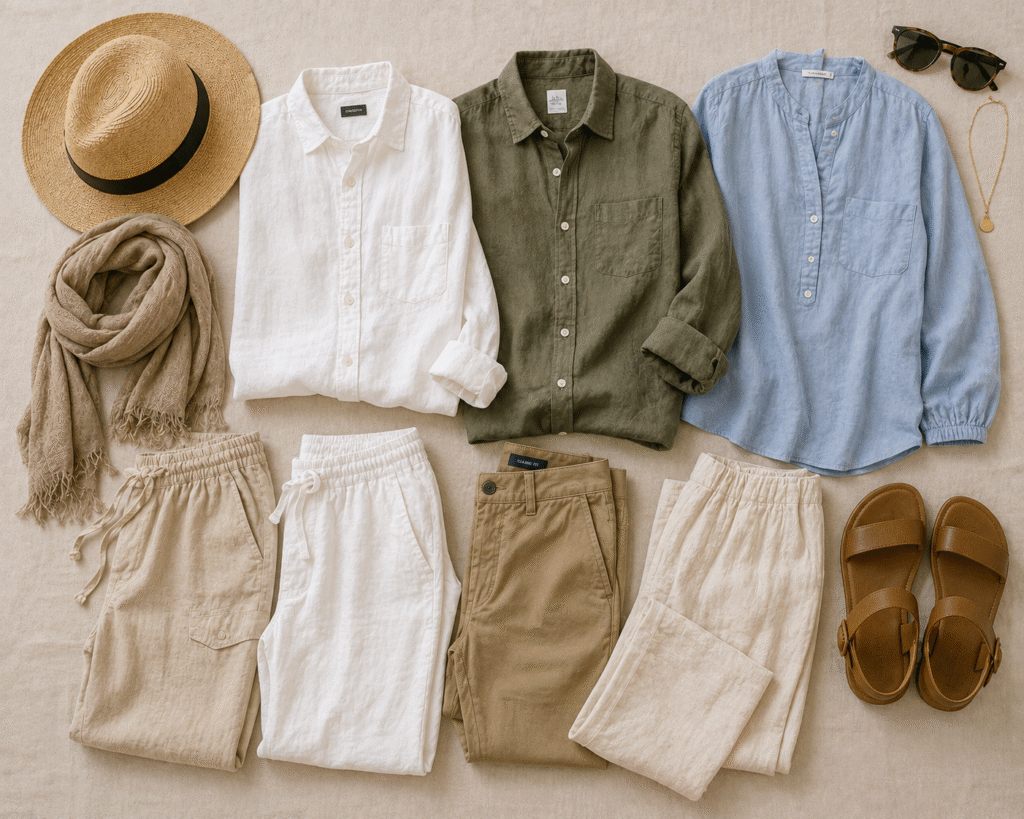
You don’t need special “Egypt clothes.”
Lightweight cotton or linen clothing is comfortable throughout most of the year, while clothing that covers your shoulders and knees works well for both sun protection and visits to religious sites.
Consider packing:
- T-shirts and lightweight tops
- Breathable long-sleeved shirts
- Linen or lightweight trousers
- Knee-length shorts
- Casual evening clothes
- Underwear and sleepwear
- Lightweight sweater or jacket (winter or evenings)
- Swimwear (if visiting the Red Sea or hotel pools)
Women may also wish to pack a lightweight scarf for mosque visits.
If you’re unsure what clothing is most appropriate, see our detailed guide:
Footwear
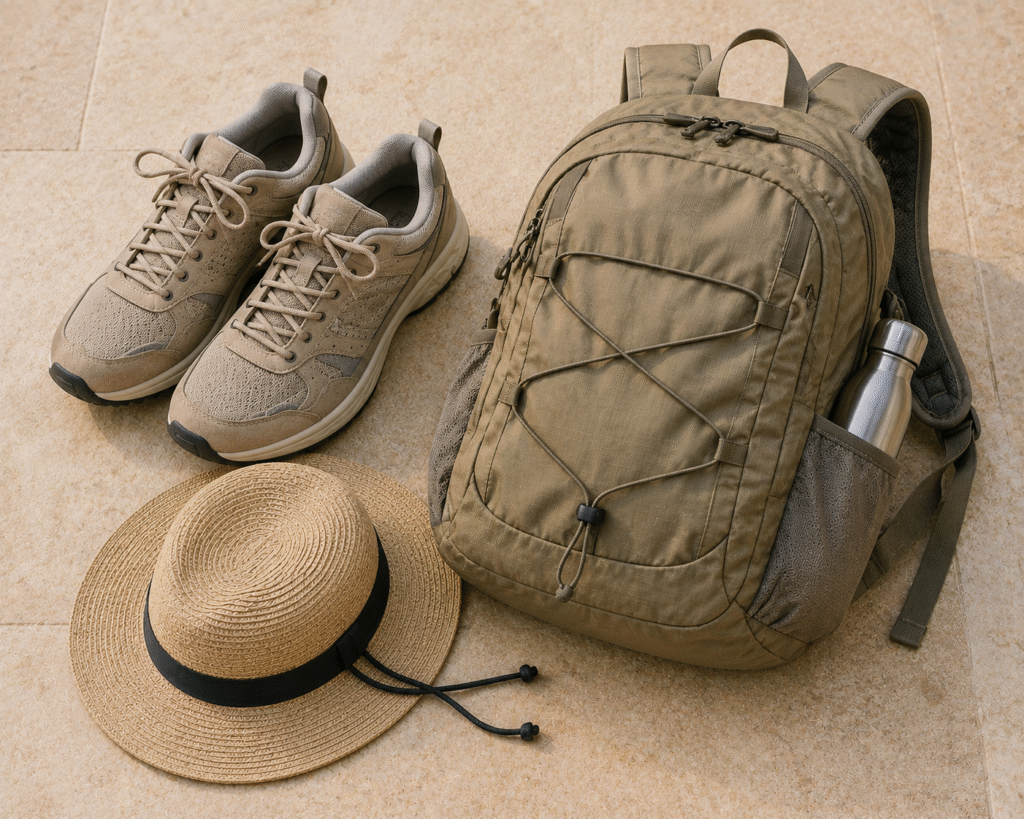
Many visitors underestimate how much walking they’ll do.
Archaeological sites such as the Giza Plateau, Saqqara, Karnak Temple, the Valley of the Kings, and Abu Simbel involve uneven surfaces, stairs, sand, and extensive walking.
Pack:
- Comfortable walking shoes or trainers
- Lightweight sandals
- Flip-flops (for hotel pools or beaches only)
Avoid bringing brand-new shoes that haven’t been broken in before your trip.
Sun Protection
The Egyptian sun is often stronger than visitors expect, even during winter.
Packing effective sun protection can make sightseeing much more comfortable.
Bring:
- Wide-brimmed hat or cap
- UV-protection sunglasses
- High-SPF sunscreen
- Lip balm with SPF
- After-sun lotion if desired
Many travelers find lightweight long sleeves more comfortable than exposing their arms to several hours of direct sunshine.
Day Bag Essentials
You’ll carry these items almost every day while sightseeing.
A small daypack or cross-body bag is usually enough for:
- Passport (when required)
- Wallet
- Phone
- Portable charger
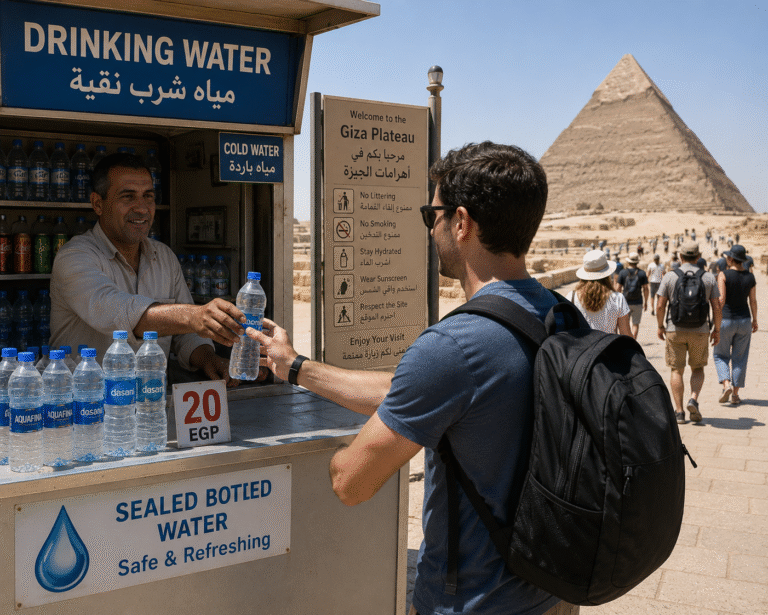
- Water bottle
- Sunscreen
- Sunglasses
- Hat
- Lightweight scarf
- Camera
- Tissues
- Hand sanitizer
The goal is to carry only what you’ll actually need during the day rather than your entire suitcase.
Electronics
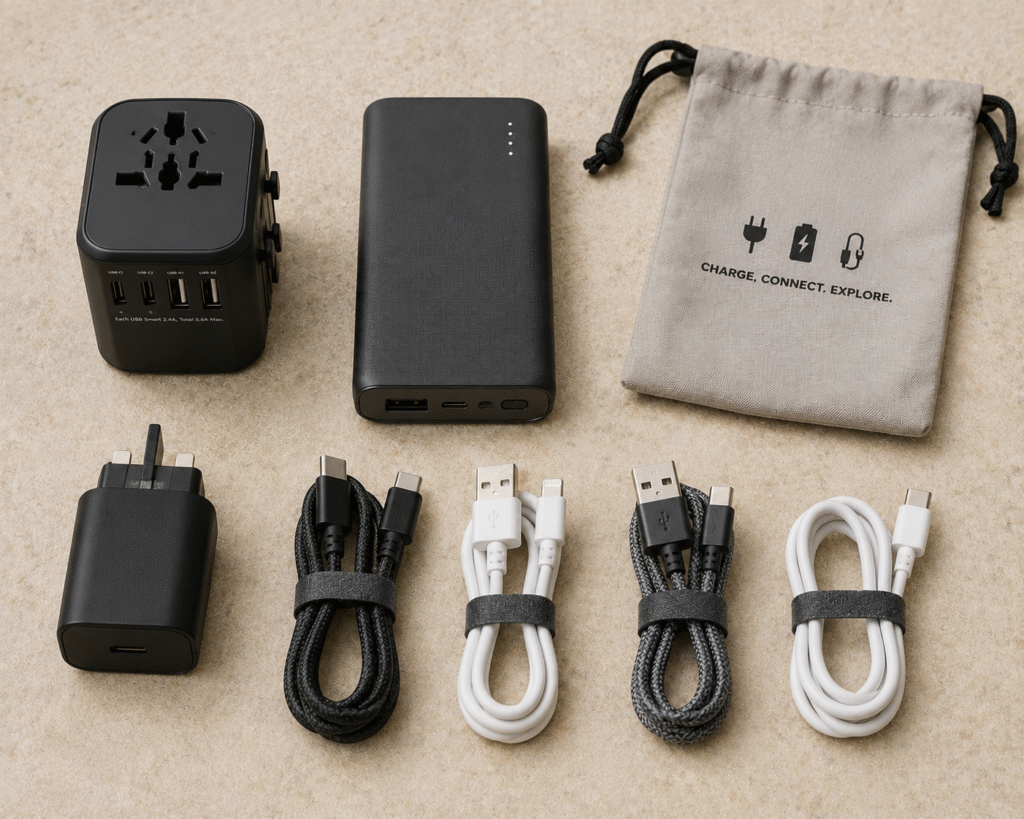
Egypt uses Type C and Type F electrical outlets with a standard voltage of 220V and a frequency of 50Hz.
Most modern phone, laptop, and camera chargers are dual voltage, but always check your equipment before traveling.
Useful electronics include:
- Universal travel adapter
- Phone charger
- Camera charger
- Power bank
- Charging cables
- Headphones
- Smartwatch charger (if applicable)
If you rely on electronic devices for navigation, translation, or photography, a power bank quickly becomes one of the most useful items in your bag.
Travel Documents
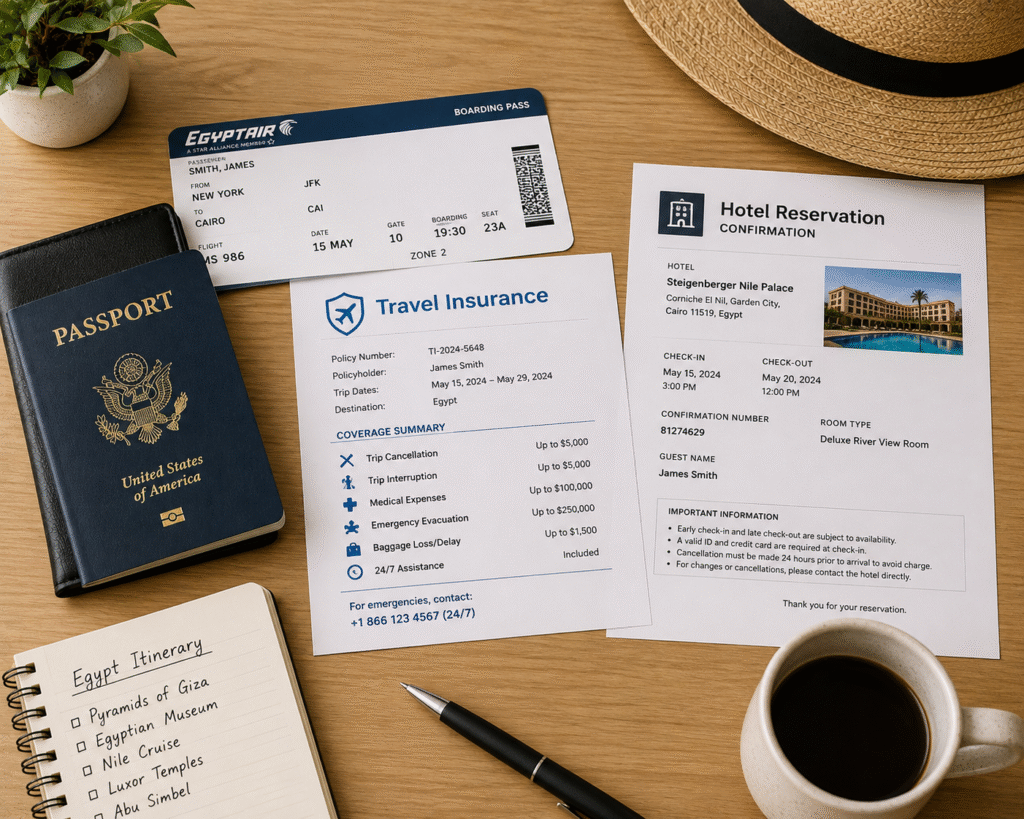
Keep all important documents together in one easily accessible place.
You should bring:
- Passport
- Visa or eVisa confirmation (if applicable)
- Travel insurance details
- Flight confirmations
- Hotel reservations
- Cruise confirmations
- Emergency contact information
- Copies of important documents (paper or digital)
When traveling between cities or checking into hotels, you’ll normally need your original passport rather than a copy.
Health & Personal Items
Egypt has pharmacies throughout major cities, but bringing your regular essentials avoids unnecessary inconvenience.
Pack:
- Prescription medications
- Basic pain relief
- Motion sickness medication (if prone to it)
- Small first-aid kit
- Insect repellent (particularly near the Nile or gardens)
- Personal toiletries
- Hand sanitizer
- Wet wipes
If you take prescription medication, carry enough for your entire trip along with a copy of your prescription where appropriate.
Money & Payments
Rather than carrying large amounts of cash from home, most travelers withdraw Egyptian pounds after arriving.
Bring:
- Debit card
- Credit card
- Small amount of emergency cash
- Wallet suitable for everyday use
Having two bank cards stored separately provides useful backup should one become lost or blocked.
For more advice, see:
→ Money in Egypt: Currency, ATMs & Credit Cards
Packing for a Nile Cruise
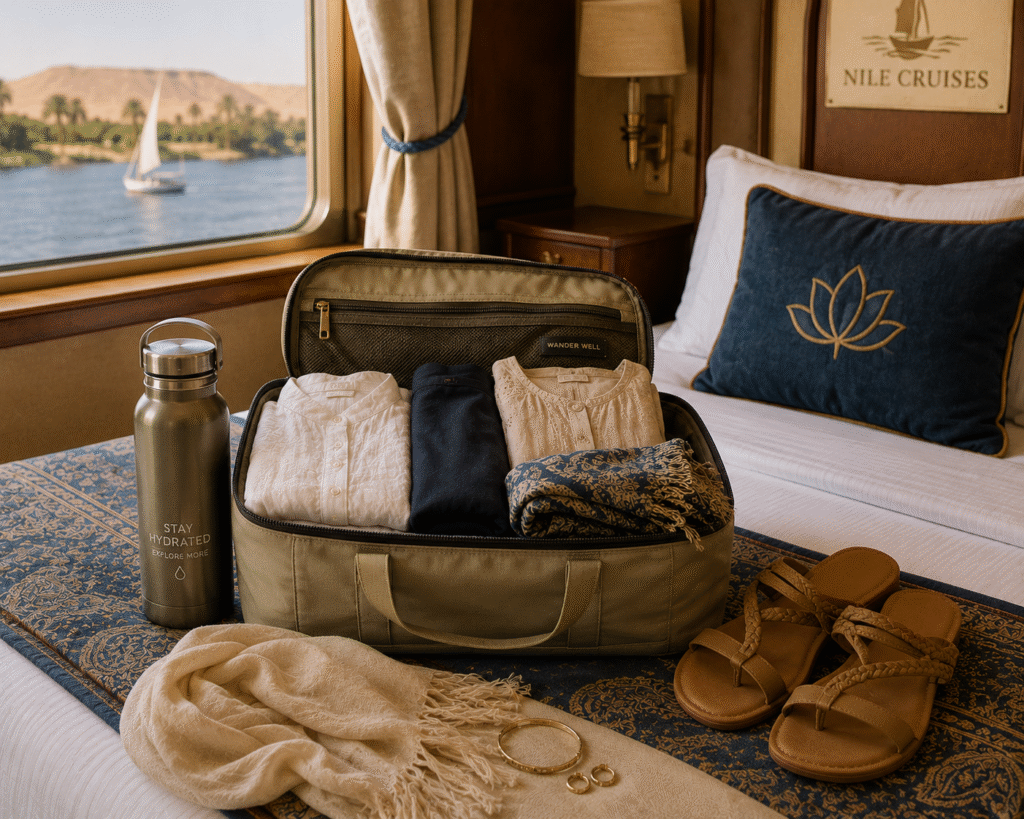
A Nile cruise doesn’t require formal clothing, but you’ll probably appreciate a few additional items.
Consider bringing:
- Smart casual evening outfit
- Small binoculars
- Swimsuit (many cruise ships have pools)
- Lightweight sandals
- Reusable water bottle
Most daytime clothing will be exactly the same as what you’d wear while sightseeing.
Packing for Red Sea Resorts
If your itinerary includes Hurghada, Sharm El Sheikh, or Marsa Alam, don’t forget:
- Swimwear
- Beach sandals
- Rash guard or UV swim shirt (optional)
- Beach bag
- Snorkeling equipment (optional—often available to rent)
- Waterproof phone pouch
Remember that while beachwear is perfectly acceptable within resorts, it’s considerate to cover up when leaving hotel beaches or pools.
Items You Can Leave at Home
One of the easiest ways to travel more comfortably is to pack less.
Most visitors don’t need:
- Heavy winter coats
- Formal evening wear
- Multiple pairs of dress shoes
- Hair dryers (usually supplied by hotels)
- Large bottles of toiletries
- Thick jeans for summer
- Bulky guidebooks if using digital resources
Packing lighter makes airport transfers, domestic flights, and hotel changes much easier.
Seasonal Packing Tips
The contents of your suitcase don’t need to change dramatically throughout the year, but a few seasonal adjustments will make your trip more comfortable.
Spring (March–May) is one of the easiest times to pack. Lightweight clothing works well during the day, while a light jacket or sweater is useful after sunset.
Summer (June–August) requires the lightest clothing possible. Breathable fabrics, sun protection, and a reusable water bottle become essential, particularly in Upper Egypt where temperatures regularly exceed 40°C (104°F).
Autumn (September–November) is similar to spring. Warm days are common, but evenings gradually become cooler, especially toward November.
Winter (December–February) surprises many visitors. Daytime sightseeing is usually pleasant, but mornings and evenings—particularly in Cairo, Luxor, Aswan, and desert areas—can feel cool. A fleece or lightweight jacket is normally sufficient, and visitors spending time along the Mediterranean coast may also encounter occasional rain.
Common Packing Mistakes
Many travelers bring far more than they actually use.
One of the most common mistakes is packing heavy clothing because Egypt is associated with the desert. In reality, lightweight layers are usually much more practical than thick jumpers or coats.
Another frequent mistake is underestimating the amount of walking involved. Visitors often spend entire days exploring archaeological sites, museums, and historic neighborhoods. Comfortable footwear quickly becomes more important than fashionable shoes.
Some travelers also pack clothing that’s ideal for a beach holiday but less suitable for visiting mosques, traditional neighborhoods, or long sightseeing days under the sun. Packing a lightweight scarf and clothing with a little extra coverage provides much more flexibility.
Finally, many people forget everyday essentials such as a power bank, reusable water bottle, charging cables, or sunscreen—items that often prove more useful than extra changes of clothes.
Last-Minute Checklist
Before leaving for the airport, make sure you have:
- Passport
- Visa or eVisa approval (if required)
- Flight tickets
- Hotel confirmations
- Travel insurance documents
- Credit and debit cards
- Prescription medication
- Phone and charger
- Universal travel adapter
- Comfortable walking shoes
- Sunglasses
- Hat
- Sunscreen
A final check at home is much easier than replacing forgotten essentials after arrival.
Frequently Asked Questions
Do I need special clothing for Egypt?
No. Lightweight, comfortable clothing suitable for warm weather is appropriate for most visitors. You don’t need a special travel wardrobe.
Should I bring a jacket?
Yes, particularly if you’re traveling between November and March. Even during warmer months, air-conditioned buses, hotels, and evening Nile cruises can feel cool.
Are hiking boots necessary?
Generally not.
Unless you’re planning extended desert trekking, comfortable tennis shoes or supportive walking shoes are usually a better choice for archaeological sites and city sightseeing.
Can I buy forgotten items in Egypt?
Yes.
Major cities such as Cairo, Alexandria, Luxor, Aswan, Hurghada, and Sharm El Sheikh all have supermarkets, pharmacies, shopping malls, and clothing stores where most everyday items can be purchased.
Should I pack a reusable water bottle?
Yes.
It’s one of the most useful items for sightseeing. While bottled drinking water is widely available throughout Egypt, carrying a reusable bottle makes it easier to stay hydrated throughout the day.
Related Egyptian Nile Adventures Articles
Packing is only one part of preparing for your trip. These guides will help you arrive in Egypt fully prepared.
Continue Planning Your Trip
- What to Wear in Egypt – Learn what’s appropriate for cities, archaeological sites, mosques, Nile cruises, and Red Sea resorts.
- Best Time to Visit Egypt – Discover how the seasons affect weather and packing.
- Money in Egypt: Currency, ATMs & Credit Cards – Learn how to manage cash and payments during your trip.
- Transportation in Egypt – Compare flights, trains, taxis, ride-hailing apps, and Nile cruises.
- Is Egypt Safe for Tourists? – Practical advice for staying safe throughout your visit.
- First-Time Visitor’s Guide to Egypt – A complete roadmap for planning your first trip.
Conclusion
Packing for Egypt doesn’t need to be complicated. Most travelers already own almost everything they’ll need. The focus should be on practical, lightweight clothing, comfortable footwear, and a few carefully chosen accessories that make long sightseeing days more enjoyable.
Rather than filling your suitcase with “just in case” items, think about the trip you’re actually taking. A week exploring ancient temples requires different priorities than a beach holiday on the Red Sea, but in both cases, packing light usually makes travel easier.
With comfortable clothing, sensible sun protection, reliable walking shoes, and your essential documents organized before departure, you’ll be well prepared to enjoy your time in Egypt without worrying about what you forgot to bring.