Transportation in Egypt: How to Get Around by Plane, Train, Taxi & More
Getting around Egypt is easier than many first-time visitors expect, but choosing the right form of transportation can make a significant difference to both your budget and your overall experience.
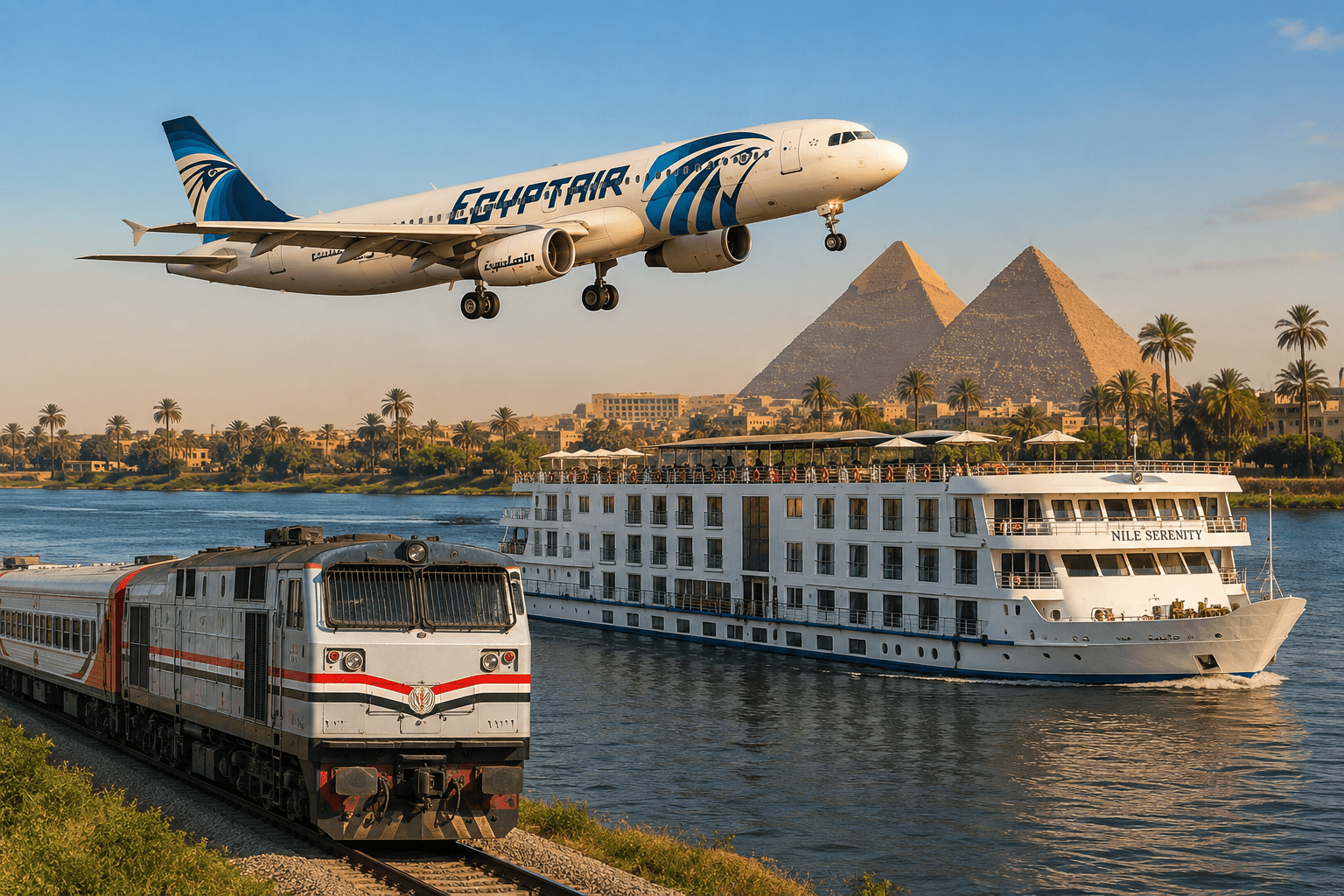
Egypt has a well-developed network of domestic flights, railways, highways, ride-hailing apps, river cruises, and private transportation. The best option depends on where you’re traveling, how much time you have, and whether your priority is convenience, cost, or experiencing the journey itself.
A traveler spending four days in Cairo will move around very differently from someone following a two-week itinerary between Alexandria, Luxor, Aswan, and the Red Sea. Understanding the strengths and limitations of each transport option before you arrive makes planning much easier.
Quick Answer
For most first-time visitors:
- Domestic flights are the quickest way to travel between Cairo, Luxor, Aswan, and the Red Sea.
- Ride-hailing apps such as Uber and Careem are usually the easiest way to get around Cairo and Alexandria.
- Trains are a comfortable alternative between Cairo, Luxor, and Aswan if you have more time.
- Private drivers offer the greatest flexibility for sightseeing.
- Nile cruises combine transportation with accommodation between Luxor and Aswan.
Rather than relying on one method of transportation throughout your trip, most visitors use a combination of these options.
Understanding Travel Distances in Egypt
One of the biggest surprises for first-time visitors is how spread out Egypt’s main destinations are.
Although the country’s most famous archaeological sites follow the Nile Valley, the distances between them are considerable.
For example:
| Route | Approximate Distance |
|---|---|
| Cairo → Alexandria | 220 km (137 mi) |
| Cairo → Luxor | 650 km (404 mi) |
| Cairo → Aswan | 870 km (540 mi) |
| Luxor → Aswan | 220 km (137 mi) |
| Hurghada → Luxor | 290 km (180 mi) |
Looking only at a map can make Egypt seem compact. In reality, moving between destinations should be considered part of your itinerary rather than simply a transfer between attractions.
Domestic Flights
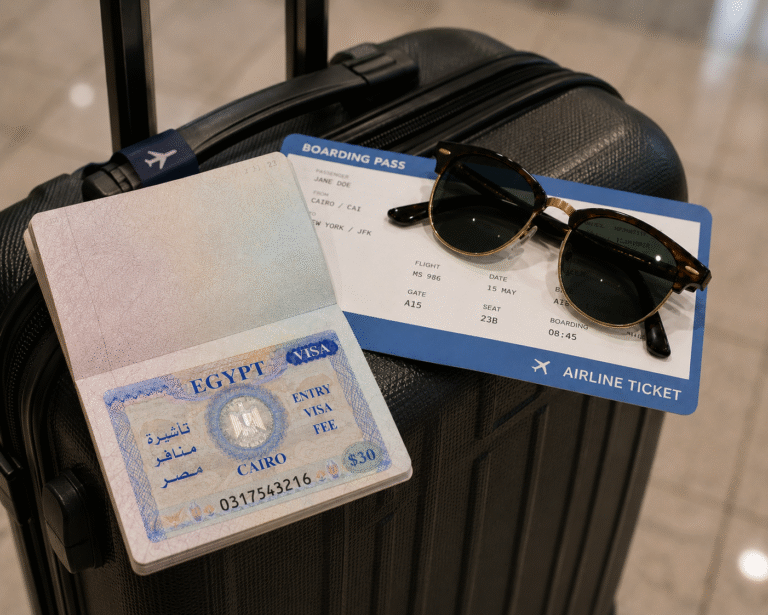
For travelers with limited time, domestic flights are often the most practical option.
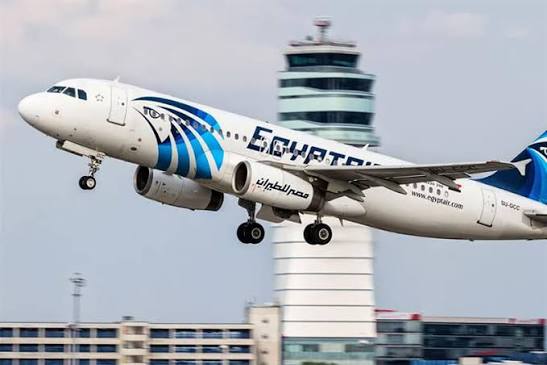
EgyptAir operates regular services between Cairo and the country’s major tourist destinations, including Luxor, Aswan, Hurghada, Sharm El Sheikh, and Alexandria. Other airlines may also serve some domestic routes.
Flying dramatically reduces travel time compared with trains or road transfers. A flight between Cairo and Luxor takes around one hour, making it possible to combine both destinations comfortably within a week-long itinerary.
The main advantages include:
- Significant time savings.
- Frequent connections on popular routes.
- Convenient for shorter itineraries.
- Useful when combining cultural sightseeing with Red Sea resorts.
The trade-off is cost. Domestic flights are generally more expensive than trains, and airport transfers, baggage policies, and check-in procedures should also be factored into your planning.
For most first-time visitors with seven to ten days in Egypt, flying between Cairo and Upper Egypt is often the most efficient choice.
Egypt’s Rail Network
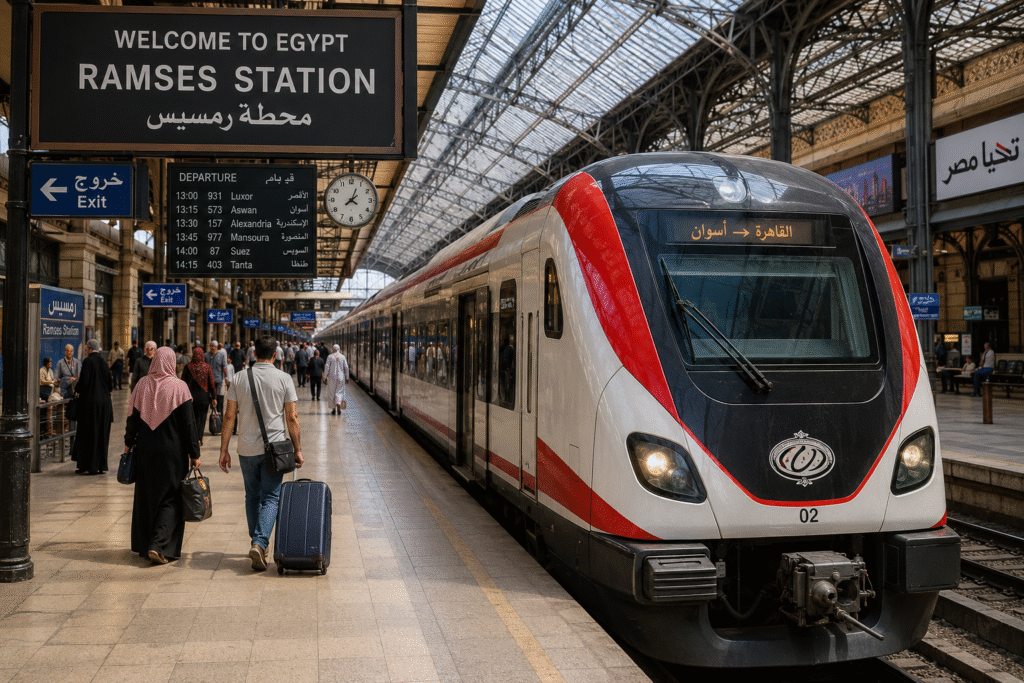
Egypt’s railway system has connected the country for more than a century and remains an important way to travel between major cities.
The busiest tourist route links Cairo with Luxor and Aswan, offering both daytime and overnight services.
For travelers who enjoy watching the landscape change rather than flying over it, train travel can be a memorable part of the journey.
Modern air-conditioned services are considerably more comfortable than many visitors expect, although journey times are naturally much longer than domestic flights.
The train is particularly attractive for travelers with flexible schedules who would rather save money or avoid airports than reach their destination as quickly as possible.
Before relying on rail travel, however, it’s worth checking current schedules and booking procedures, as services and reservation systems occasionally change. Check the latest Egyptian National Railways schedules and services.
Overnight Sleeper Trains
One option that attracts many first-time visitors is the overnight sleeper train between Cairo and Upper Egypt.
Rather than spending a night in a hotel, passengers travel while sleeping and arrive the following morning in Luxor or Aswan.
Private cabins provide beds, air conditioning, and basic onboard services.
For some travelers, this is an enjoyable experience in its own right.
Others prefer flying because it provides far more sightseeing time.
The decision usually comes down to whether you value the journey itself or maximizing your time at your destination.
Private Drivers
Hiring a private driver is one of the easiest ways to explore Egypt, particularly for families, small groups, or travelers visiting multiple archaeological sites in one day.
Unlike taxis, private drivers remain with you throughout your itinerary rather than transporting you between individual locations.
This offers several advantages.
There’s no need to negotiate multiple rides, arrange return transportation, or worry about finding a taxi outside less-visited attractions. A driver familiar with local traffic patterns can also make sightseeing days more efficient.
Private transportation is particularly useful for day trips such as:
- Cairo to Saqqara
- Cairo to Fayoum
- Luxor West Bank
- Abu Simbel from Aswan
Although more expensive than public transportation, many travelers consider the convenience worthwhile, especially when costs are shared between several people.
Uber and Careem
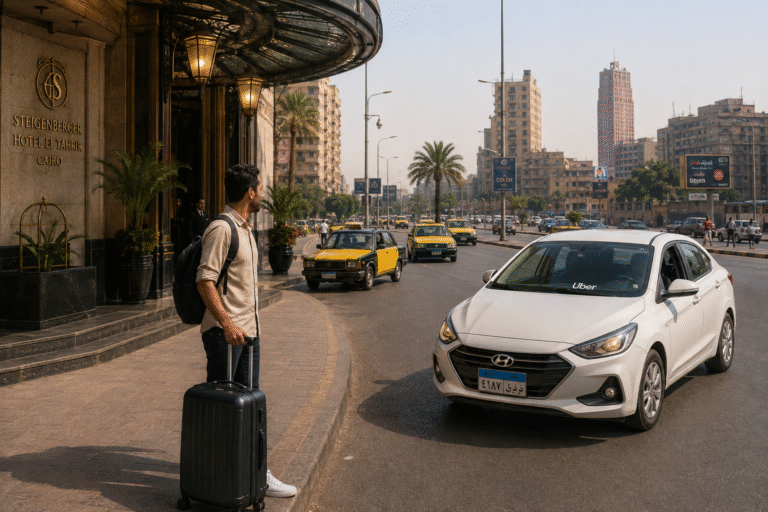
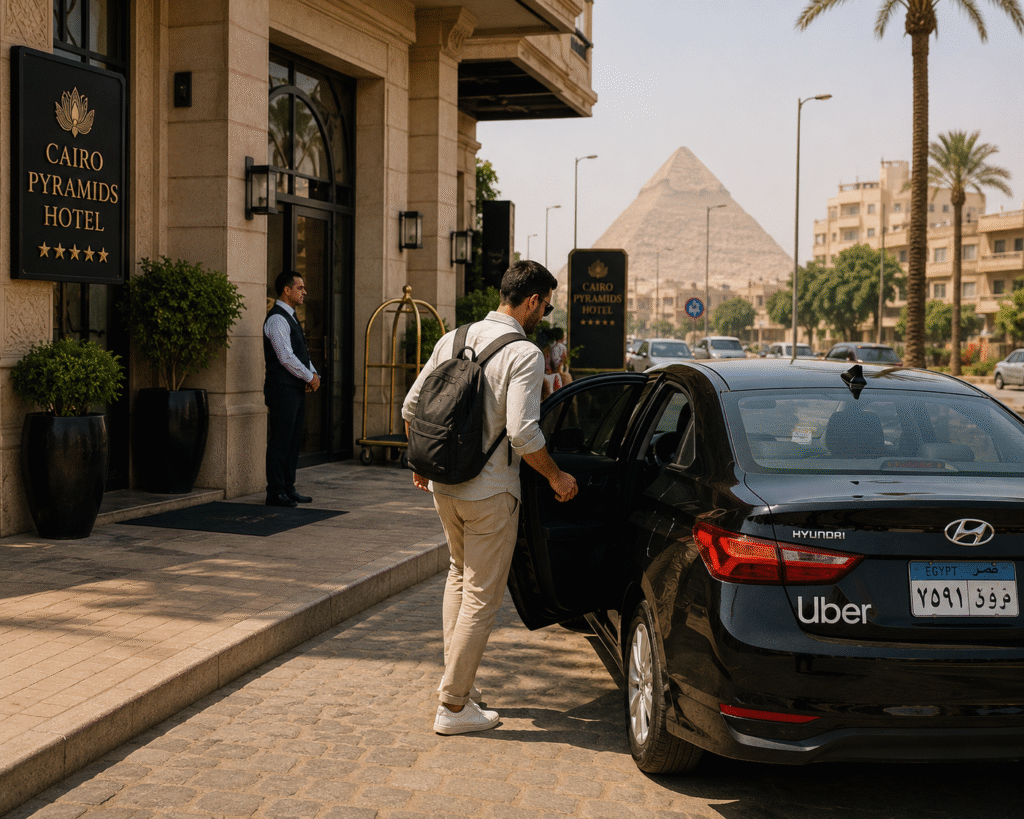
For getting around Cairo and Alexandria, ride-hailing apps have become the preferred option for many international visitors.
Uber and Careem allow passengers to see estimated fares before requesting a ride, reducing the need to negotiate prices or discuss routes.
This makes them especially helpful for first-time visitors unfamiliar with local transportation.
Most hotels are also happy to help guests identify suitable pickup points if needed.
While traditional taxis remain widely available, many travelers appreciate the simplicity and transparency offered by ride-hailing apps.
Traditional Taxis
Traditional taxis continue to operate throughout Egypt and remain a common sight in every major city.
Many drivers are honest and experienced, but visitors should confirm that the meter will be used before beginning the journey whenever possible.
If a taxi does not use a meter, agreeing on the fare before departure helps prevent misunderstandings later.
For travelers unfamiliar with local prices, ride-hailing apps generally provide greater predictability.
Microbuses
Microbuses form an important part of daily transportation for millions of Egyptians.
They are inexpensive and extensive but are designed primarily for local commuters rather than visitors.
Routes are rarely displayed in English, departures depend on passenger demand rather than fixed timetables, and luggage space is often limited.
Unless you’re traveling with someone familiar with the system or have previous experience in Egypt, microbuses are unlikely to be the easiest option for most international visitors.
They can be useful in certain situations but are not generally recommended as the primary means of transport for first-time travelers.
Buses
Long-distance buses connect many of Egypt’s major cities and are an alternative to both trains and domestic flights.
Companies such as Go Bus, Blue Bus, and SuperJet operate modern coaches between destinations including Cairo, Alexandria, Hurghada, Sharm El Sheikh, Luxor, and Marsa Matruh.
For some routes—particularly those where rail service is limited—buses may be the most practical public transportation option.
Many modern coaches offer:
- Air conditioning
- Reserved seating
- Onboard restrooms (on selected services)
- Wi-Fi on some premium routes
- Online booking
Journey times, however, can be long. A route that takes one hour by air may require eight or more hours by road.
For travelers on a tighter budget, buses can provide excellent value. Those with limited vacation time often find domestic flights a better use of their schedule.
Nile Cruises as Transportation
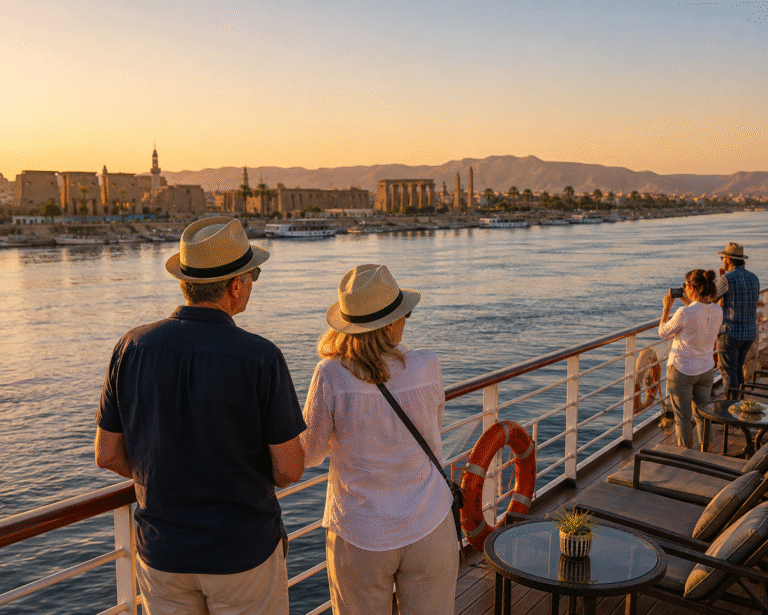
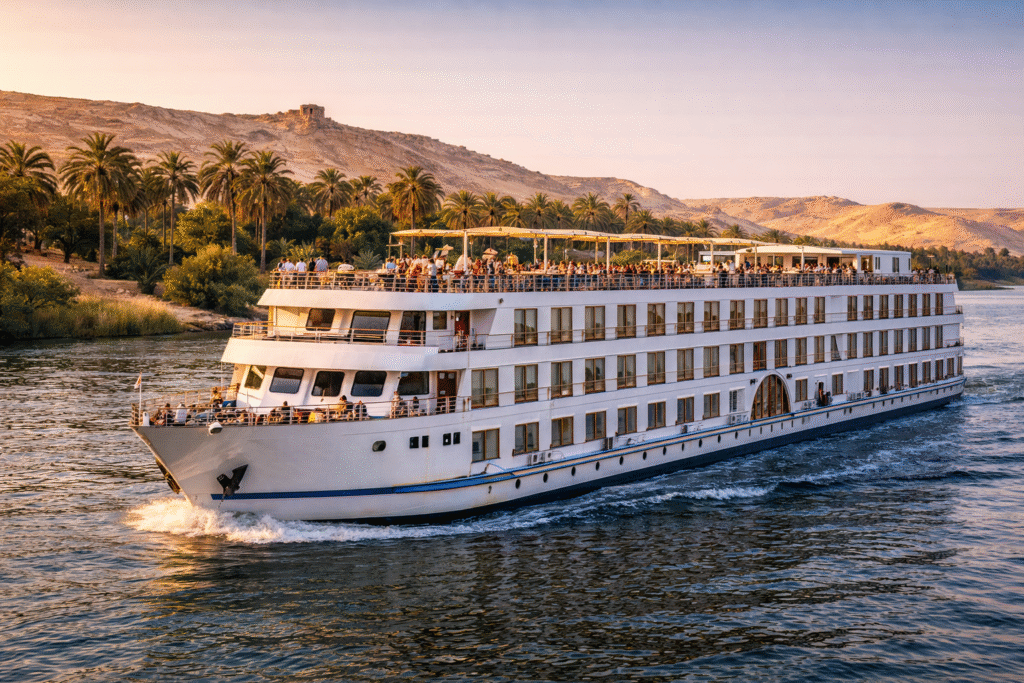
A Nile cruise is more than a sightseeing experience—it’s also one of Egypt’s most enjoyable forms of transportation.
Rather than repeatedly packing and unpacking while traveling between Luxor and Aswan, passengers remain in the same cabin while the ship travels along the Nile.
Each day combines sailing with guided visits to archaeological sites such as:
- Karnak Temple
- Luxor Temple
- Valley of the Kings
- Edfu Temple
- Kom Ombo Temple
- Philae Temple
For many visitors, the journey itself becomes one of the highlights of the trip.
While a cruise is not the fastest way to travel between Luxor and Aswan, it is often the most relaxing.
Feluccas and Local Boats
Traditional feluccas continue to sail the Nile, particularly around Aswan and parts of Luxor.
Unlike cruise ships, feluccas are small wooden sailing boats powered primarily by the wind.
Most visitors experience them as short sightseeing cruises lasting one or two hours rather than as long-distance transportation.
Motorboats are also commonly used to reach attractions such as:
- Philae Temple
- Elephantine Island
- Botanical Garden (Kitchener’s Island)
- Nubian villages around Aswan
These short river crossings form a normal part of sightseeing in Upper Egypt.

Renting a Car
Although international car rental companies operate in Egypt, renting a car is not the best choice for most first-time visitors.
Driving conditions differ considerably from those in many Western countries.
Traffic in Cairo is extremely busy, road rules are often interpreted differently than visitors expect, and parking near major attractions can be limited.
Navigation is generally straightforward using modern mapping apps, but local driving styles require confidence and experience.
For most tourists, hiring a private driver provides nearly all the flexibility of renting a car without the stress of driving yourself.
The main exception may be experienced travelers planning to explore areas where organized transportation is limited.
Is Public Transportation Safe?
Egypt’s transportation system is used daily by millions of residents and visitors.
Like any large country, different forms of transportation offer different levels of comfort and convenience.
For most international travelers:
- Domestic flights are the quickest option.
- Ride-hailing apps are generally the easiest choice within cities.
- Trains provide a comfortable experience between major destinations.
- Private drivers offer the greatest flexibility.
- Modern long-distance buses are suitable for many routes.
Using reputable transportation providers and planning journeys in advance generally results in a smooth travel experience.
Which Transportation Is Best?
There isn’t one best method of transportation for every traveler.
Someone spending four days in Cairo will likely rely almost entirely on Uber or Careem.
A couple enjoying a ten-day holiday might combine domestic flights with a Nile cruise.
Families often appreciate the convenience of private drivers, while budget-conscious travelers may prefer trains or long-distance buses.
The most successful itineraries combine different forms of transportation according to each stage of the journey rather than relying exclusively on one option.
Frequently Asked Questions
Is Uber available in Egypt?
Yes.
Uber operates in Cairo and Alexandria and is one of the easiest ways for visitors to travel around both cities. Careem is also widely available.
Is it better to fly or take the train?
It depends on your priorities.
If time is limited, flying is usually the better option.
If you enjoy slower travel or want to reduce transportation costs, trains can be an excellent alternative between Cairo, Luxor, and Aswan.
Should tourists rent a car?
For most visitors, no.
Private drivers, domestic flights, trains, and ride-hailing apps are generally easier and less stressful than driving yourself.
How do you get from Luxor to Aswan?
The most common options are:
Nile cruise
Train
Private vehicle
Domestic flight (less common due to the relatively short distance)
The best choice depends on your itinerary and available time.
Can I use Uber in Luxor or Aswan?
Ride-hailing services are much less established in Luxor and Aswan than in Cairo and Alexandria. Visitors typically rely on taxis, hotel transportation, or pre-arranged private drivers in these cities.
Related Egyptian Nile Adventures Articles
Transportation is one part of planning an enjoyable trip. These guides will help you organize the rest of your itinerary.
Continue Planning Your Trip
- How Many Days Do You Need in Egypt? – Build an itinerary that matches your available time.
- Egypt Travel Costs: How Much Does a Trip Cost? – Compare transportation costs with accommodation, sightseeing, and daily expenses.
- Money in Egypt: Currency, ATMs & Credit Cards – Learn how to pay for transportation and withdraw cash during your trip.
- Tipping in Egypt: When, Where & How Much – Understand when gratuities are customary for drivers, guides, and cruise staff.
- Best Time to Visit Egypt – Discover how weather can affect travel around the country.
- First-Time Visitor’s Guide to Egypt – A complete planning guide for your first visit.
Conclusion
Egypt offers a wide variety of transportation options, making it possible to tailor your journey to your budget, schedule, and travel style.
For most first-time visitors, the simplest approach is to combine domestic flights for longer distances with ride-hailing apps in Cairo and Alexandria, private drivers for sightseeing days, and either a Nile cruise or train between Luxor and Aswan. This combination balances convenience, comfort, and efficient use of your time.
Rather than looking for a single “best” way to travel around Egypt, think of each mode of transport as serving a different purpose. Flights help maximize sightseeing time, trains offer a more leisurely journey through the Nile Valley, private drivers simplify day trips, and Nile cruises transform transportation into one of the highlights of the holiday itself.
Choosing the right mix of transportation allows you to spend less time worrying about logistics and more time experiencing Egypt’s remarkable history, landscapes, and culture.