
How Many Days Do You Need in Egypt? Choosing the Right Itinerary for Your Trip
Egypt is one of those destinations where it’s easy to underestimate how much there is to see. Many first-time visitors arrive thinking they can experience the country’s highlights in just a few days, only to discover that distances are greater than expected and that each destination deserves more time than they originally planned.
The good news is that Egypt can be enjoyed whether you have four days or three weeks. The key is building an itinerary that matches the time you actually have instead of trying to squeeze every famous site into a schedule that leaves little room to enjoy the experience.
For most travelers, the question isn’t simply “How many days do I need?” It’s “What can I realistically experience in the time I have?”
Understanding that distinction leads to a far more enjoyable trip.
Quick Answer
If you’re visiting Egypt for the first time, 7 to 10 days is the ideal length of stay.
That provides enough time to explore Cairo, visit the Pyramids of Giza and the Grand Egyptian Museum, experience Luxor and Aswan, and enjoy a Nile cruise without feeling constantly rushed.
Travelers with only four or five days can still experience Egypt’s highlights, while those with two weeks or longer have the opportunity to explore the country at a much more relaxed pace and include destinations such as Abu Simbel, Alexandria, the Red Sea, or the Western Desert.
There is no perfect number of days for every traveler. The best itinerary depends on your interests, travel style, and priorities.
Why Egypt Takes Longer Than Many People Expect
Looking at a map, Egypt can appear surprisingly compact. Cairo, Luxor, and Aswan are all located along the Nile, and it’s tempting to assume they can easily be visited within a few days.
In practice, travel takes longer than many visitors expect.
Egypt isn’t simply a collection of individual attractions. It’s a country where the experience includes moving between destinations, checking into hotels, taking domestic flights or trains, boarding Nile cruises, and allowing time to appreciate some of the world’s most important archaeological sites.
The Pyramids of Giza alone can occupy most of a day when combined with the nearby Grand Egyptian Museum. Luxor is home to dozens of significant monuments spread across both sides of the Nile, while Aswan offers a slower pace that many visitors later describe as one of the highlights of their trip.
Trying to compress too much into too little time often results in spending more hours in airports, vehicles, or hotel lobbies than actually enjoying Egypt itself.
For that reason, planning a realistic itinerary is usually more rewarding than trying to visit every famous landmark in a single vacation.
A Good Egypt Itinerary Balances Travel and Exploration
One of the most common mistakes first-time visitors make is assuming that every day can be devoted entirely to sightseeing.
In reality, every trip includes travel days. Domestic flights require airport transfers, hotel changes take time, and Nile cruises follow fixed embarkation schedules. Even moving between nearby attractions often takes longer than visitors expect because of traffic, security procedures, or simply the size of archaeological sites.
The most enjoyable itineraries balance active sightseeing with opportunities to slow down. Sitting on the deck of a Nile cruise as it sails between Luxor and Aswan, watching feluccas drift across the river at sunset, or spending an evening in a local café are all part of experiencing Egypt—not interruptions to it.
Building that breathing room into your itinerary often makes the entire trip feel richer rather than shorter.
How Much Can You See in Different Trip Lengths?
The amount you can comfortably experience changes significantly depending on how many days you have available. The following guide assumes a typical first-time visitor arriving through Cairo.
| Trip Length | What You Can Realistically See |
|---|---|
| 3–4 Days | Cairo, Giza, Grand Egyptian Museum |
| 5–6 Days | Cairo plus Luxor or Aswan |
| 7–10 Days | Cairo, Luxor, Aswan and a Nile cruise |
| 11–14 Days | Classic itinerary plus Abu Simbel or the Red Sea |
| 15+ Days | Comprehensive Egypt including Alexandria, Red Sea or Western Desert |
The goal isn’t to visit as many places as possible. It’s to spend enough time in each destination to appreciate why people travel halfway around the world to experience it.
If You Have Three or Four Days
A short visit works best when you focus entirely on Cairo and Giza.
Trying to add Luxor or Aswan usually creates more travel than sightseeing, leaving little opportunity to appreciate either destination. Instead, devote your time to Egypt’s capital and its surrounding archaeological treasures.
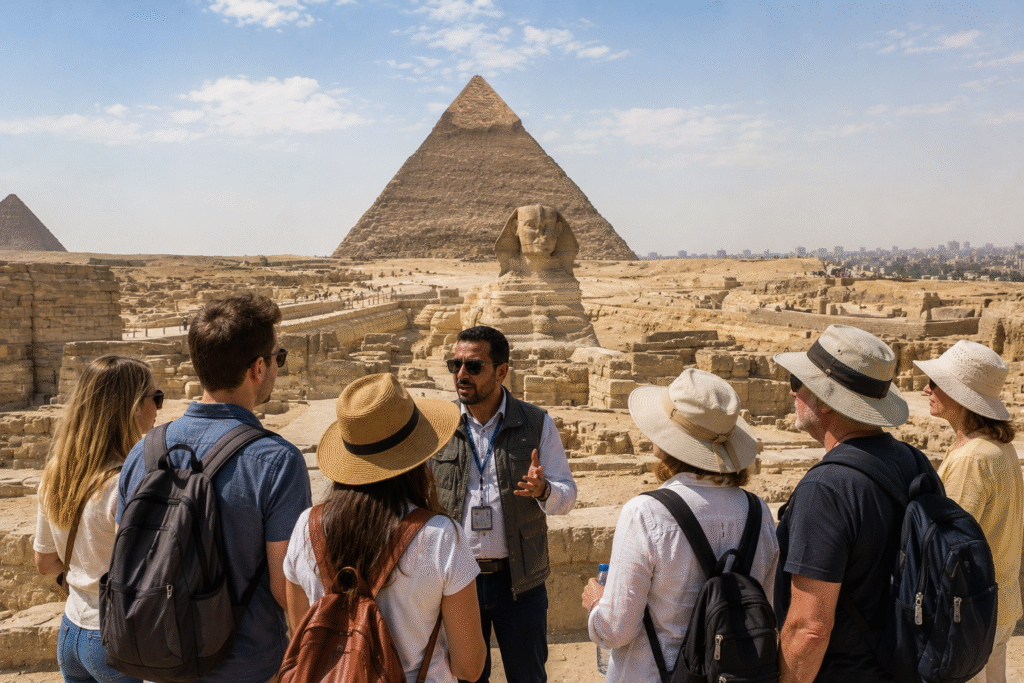
During four days, most visitors can comfortably explore the Pyramids of Giza, the Great Sphinx, the Grand Egyptian Museum, Old Cairo (including Coptic Cairo), Khan El Khalili Bazaar, and, if archaeology is a particular interest, Saqqara. While both Alexandria and Fayoum can be visited as day trips from Cairo, adding either destination usually makes a four-day itinerary feel rushed. Most travelers will have a more rewarding experience by focusing on Cairo and Giza alone.
Although you’ll only experience one region of Egypt, you’ll still gain an excellent introduction to the country’s history, culture, and atmosphere without spending a large portion of your holiday in transit.
If You Have Five or Six Days
With nearly a week available, your itinerary becomes much more flexible.
Many travelers choose to divide their time between Cairo and Luxor, combining Egypt’s most famous ancient monuments with one of the world’s greatest open-air museums. Domestic flights make this itinerary practical, although sightseeing remains relatively fast-paced.
Another option is Cairo combined with Aswan, particularly for travelers seeking a more relaxed atmosphere. While Aswan contains fewer major archaeological sites than Luxor, many visitors appreciate its slower rhythm, beautiful Nile scenery, and easy access to Philae Temple.
Not every five- or six-day itinerary needs to include a domestic flight. Travelers who prefer to avoid changing hotels several times may choose to remain based in Cairo and explore beyond the capital instead. Alexandria, on Egypt’s Mediterranean coast, offers a very different perspective on the country’s history, while Fayoum is known for its desert landscapes, lakes, waterfalls, and protected natural areas. Both destinations can be visited as day trips from Cairo and work particularly well for travelers returning to Egypt or those looking to combine ancient history with natural scenery.
At this stage, it becomes important to decide whether your priority is seeing more places or enjoying fewer destinations at a gentler pace. Neither approach is inherently better—it simply depends on the type of holiday you want.
If You Have Seven to Ten Days
For many travelers, this is where Egypt truly begins to reveal itself.
A week or slightly longer provides enough time to experience the country’s most iconic destinations without feeling that every hour must be scheduled. Cairo can be explored properly, followed by time in Luxor and Aswan connected by a Nile cruise or domestic transportation.
Rather than rushing through temples simply to tick them off a list, visitors have the opportunity to appreciate the stories behind them, enjoy evenings along the Nile, and absorb the atmosphere that makes Egypt so distinctive.
If someone asked for the single itinerary that suits the greatest number of first-time visitors, seven to ten days would almost certainly be the answer. It offers an excellent balance between sightseeing, travel time, and relaxation while allowing travelers to experience the diversity of Egypt rather than just its most famous landmarks.

If You Have Eleven to Fourteen Days
Two weeks, or close to it, is where your itinerary begins to feel less like a sightseeing checklist and more like a journey through Egypt.
With additional time, you no longer need to choose between the country’s major destinations. Instead, you can explore Cairo at a comfortable pace, cruise the Nile between Luxor and Aswan, visit Abu Simbel without feeling rushed, and still have time to relax before heading home.
Many travelers also use these extra days to include the Red Sea. After several days spent walking through temples and archaeological sites, a few days in Hurghada, El Gouna, Marsa Alam, or Sharm El Sheikh provide a welcome change of pace. Swimming, snorkeling, diving, or simply relaxing by the sea creates a natural balance between active sightseeing and leisure.
Others prefer to use the extra time for Alexandria, where Mediterranean influences, historic cafés, and coastal scenery provide a different perspective on Egypt’s history.
The advantage of a longer itinerary isn’t necessarily that you’ll see more attractions. Rather, you’ll have the opportunity to experience each destination without constantly thinking about the next flight, hotel, or transfer.

If You Have More Than Two Weeks
Travelers fortunate enough to spend fifteen days or longer in Egypt can move beyond the country’s classic highlights and begin exploring some of its lesser-known regions.
A longer itinerary might include Alexandria, several days on the Red Sea, the White Desert, Siwa Oasis, Fayoum, or additional archaeological sites that shorter itineraries simply can’t accommodate.
More importantly, extended trips allow time for slower travel.
Instead of arriving in Luxor late in the evening and leaving the following morning, you might spend an extra afternoon wandering along the Nile Corniche or taking a hot air balloon ride to see Luxor from a different perspective. Rather than treating Cairo as little more than an arrival city, you could spend time discovering its neighborhoods, cafés, museums, and markets beyond the most famous attractions.
Many travelers who return to Egypt for a second visit discover that slowing down changes the experience entirely. The country’s greatest reward isn’t simply checking famous sites off a list but allowing enough time to appreciate the landscapes, people, and daily life that connect them.

Should You Choose a Nile Cruise or Stay in Hotels?
For travelers with at least seven days, this is one of the biggest itinerary decisions.
A Nile cruise combines transportation, accommodation, meals, and guided sightseeing into one experience. Rather than repeatedly packing and unpacking, travelers settle into one cabin while the scenery gradually changes outside their window. For first-time visitors, it offers one of the easiest ways to explore Upper Egypt.
Staying in hotels, however, provides greater flexibility. Visitors can spend additional nights in Luxor or Aswan, choose their own pace, and tailor excursions around their personal interests instead of following a cruise schedule.
Neither option is universally better.
Travelers who value convenience, organization, and a classic Nile experience often prefer a cruise. Those interested in photography, independent exploration, or spending longer in specific destinations may find hotels a better fit.
The decision is less about quality and more about travel style.

Matching Your Trip Length to Your Travel Style
Every traveler approaches Egypt differently, which is why there is no single itinerary that suits everyone.
History enthusiasts often benefit from longer stays in Luxor and Saqqara rather than adding additional destinations. Families may prefer a slightly slower pace with time built in for swimming pools or beach resorts. Luxury travelers frequently combine cultural sightseeing with several relaxing days on the Red Sea, while photographers often schedule additional mornings and evenings at archaeological sites to take advantage of the changing light.
Budget also influences itinerary length. Spending more days in Egypt doesn’t necessarily mean dramatically higher costs. Once international flights are paid for, extending a trip by a few days can often represent excellent value, particularly if it allows you to avoid rushing between destinations.
The best itinerary is the one that leaves enough time to enjoy the country rather than simply moving through it.
Common Itinerary Mistakes
The biggest planning mistakes usually have little to do with choosing the wrong attractions. Instead, they involve underestimating the time needed to enjoy them.
One of the most common errors is trying to include too many destinations. Egypt is a large country, and every additional city introduces another hotel check-in, airport transfer, or travel day. What appears manageable on paper can quickly become exhausting in practice.
Another mistake is overlooking travel days entirely. Domestic flights may be relatively short, but getting to the airport, checking baggage, passing through security, collecting luggage, and transferring to a hotel still consumes valuable sightseeing time.
Some travelers also underestimate the size of Egypt’s archaeological sites. Karnak Temple, the Grand Egyptian Museum, and the Giza Plateau are not places most visitors simply “walk through” in an hour or two. Rushing these sites often leaves people feeling they saw everything without truly experiencing anything.
Finally, many itineraries forget to include time simply to enjoy Egypt. Watching feluccas drift along the Nile, sharing a leisurely dinner overlooking the river, or spending an evening in a traditional café are experiences that rarely appear on sightseeing checklists but often become lasting memories.
Which Itinerary Do We Recommend?
If someone asked us to recommend a single itinerary for a first visit to Egypt, it would almost always be seven to ten days.
That timeframe provides enough flexibility to experience Cairo’s world-famous monuments, explore Upper Egypt, and enjoy either a Nile cruise or time in both Luxor and Aswan without feeling that every day is dominated by transportation.
It also leaves room for unexpected discoveries. Some of the most memorable moments in Egypt happen between the famous landmarks—a quiet sunrise over the Nile, an evening walk through a local market, or a conversation with a café owner in Aswan.
Those moments are difficult to schedule, but they become much more likely when your itinerary allows you to slow down occasionally.
Rather than asking how many places you can fit into your holiday, ask how much time you want to spend enjoying each one. In the end, that’s often the difference between simply visiting Egypt and genuinely experiencing it.
Frequently Asked Questions
Is one week enough for Egypt?
Yes. A week is enough to experience many of Egypt’s highlights, particularly if your itinerary includes Cairo and Upper Egypt. While you won’t see every region, seven days provides a balanced introduction without feeling overly rushed.
Is five days enough to visit Egypt?
Five days is best spent focusing on Cairo and one additional destination, usually Luxor. Trying to include too many cities often results in spending more time traveling than sightseeing.
How long should I spend in Cairo?
For most first-time visitors, three full days is ideal. This allows time for the Pyramids of Giza, the Grand Egyptian Museum, Old Cairo, and Khan El Khalili, while still leaving room to explore the city at a comfortable pace.
How many days should I spend on a Nile cruise?
Most Nile cruises operate over three or four nights, depending on the route. This is generally enough time to visit the major archaeological sites between Luxor and Aswan while enjoying the experience of sailing along the Nile.
Can I combine Egypt with another country?
Yes. Some travelers combine Egypt with Jordan, Türkiye, or the United Arab Emirates. If you plan to include another country, allowing at least ten days for Egypt itself usually creates a more balanced itinerary.
Is two weeks too long for Egypt?
Not at all. Two weeks allows you to experience Egypt at a much more relaxed pace while including destinations beyond the classic Cairo–Luxor–Aswan route.
Official Resources
Before finalizing your itinerary, consult:
- Egypt Ministry of Tourism and Antiquities
- Official Egypt eVisa Portal
- Official airline schedules for domestic flights
These resources will help confirm opening hours, travel logistics, and entry requirements before your trip.
Related Egyptian Nile Adventures Articles
Continue planning your trip with these guides:
- Best Time to Visit Egypt
- Is Egypt Safe for Tourists?
- Egypt Visa Guide
- Egypt Transportation Guide
- Egypt Packing List
- What to Wear in Egypt
- Nile Cruise Guide
- Cairo Travel Guide
- Luxor Travel Guide
- Aswan Travel Guide
- First-Time Visitor’s Guide to Egypt
Conclusion
There is no single “correct” number of days to spend in Egypt.
A short trip can introduce you to the pyramids and Cairo’s remarkable museums, while two weeks or more allows you to experience the Nile, ancient temples, coastal resorts, and quieter corners of the country. What matters most is matching your itinerary to the time you genuinely have rather than trying to fit every famous landmark into one holiday.
For most first-time visitors, seven to ten days remains the ideal balance. It provides enough time to appreciate Egypt’s extraordinary history without feeling overwhelmed by constant travel, while still leaving plenty of reasons to return in the future.
Egypt has been inspiring travelers for thousands of years. Giving yourself enough time to enjoy it—not simply pass through it—is one of the best decisions you can make when planning your trip.